Since 1930 the seat of the museum is in the old palace, restored several times down the centuries, that takes ist name from ist last owners, the Castellanis. The museum displays a very accurate and important collection of scientific instruments, the proof that interest of Florence in science from the 13th century onwards was as great as its interest in art.
The
collection, or at least the oldest core,
originates from the interest of the Medici
and Lorraine family in natural, physical
and mathematical sciences. It is well
known that Cosimo I and Francesco de’ Medici
encouraged the scientific and artistic
researches in the Gran Ducal workshops,
although even Ferdinando II and Cardinal
Leopoldo promoted and continued, in the
17th century, physics experiments in
the full light of Galileo’s method.
During the 17th century, even Francesco
and Pietro Leopoldo of Lorraine continued
this type of collection with the aid
of qualified specialists like the abbot
Felice Fontana (1730-1805), who was appointed
to direct and increase the collection
of the new Museum of Physics and Natural
History inaugurated in 1775. Most of
the instruments displayed come from the
workshop of the latter museum and are
now exhibited on the second floor of
the Museum of History of Science that
also comprises the old Medici collection
originally displayed at the Uffizi.
The
first floor (11 rooms) is dedicated to
the Medici core: quadrants, astrolabus,
meridianas, dials, compasses, armillary
spheres, bussolas, real works of art
made by famous Tuscan and European artists.
The museum also exhibits the Galileo’s
original instruments, the thermometers
belonging to the "Accademia del
Cimento" (1657-1667), the microscopes
and meteorological instruments. The second
floor (10 rooms) shows a large number
of very interesting and beautiful instruments,
mostly belonging to the Lorraine family,
used for mechanical, electrostatic and
pneumatic applications. Other sections
are dedicated to mechanical clocks, sextants,
octans, pharmaceutical and chemical apparatus,
weights and measures.
The Institute
of History of Science, close to the museum,
owns a very large and old library with
lots of research material that is continuously
updated. The Institute publishes an internal
review on history of science, "Nuncius", besides carrying out permanent research work on history of science and technique, organising exhibitions and publishing monographical work, catalogues of instruments, etc. The institute also has a photographic laboratory, two restoration laboratories and a modern IT laboratory.
THE 18 THEMATIC ROOMS OF THE MUSEUM
ROOM I
The Medici Collections
ROOM II
Astronomy and Time
ROOMS III and IV
The Representation of the World
ROOM V
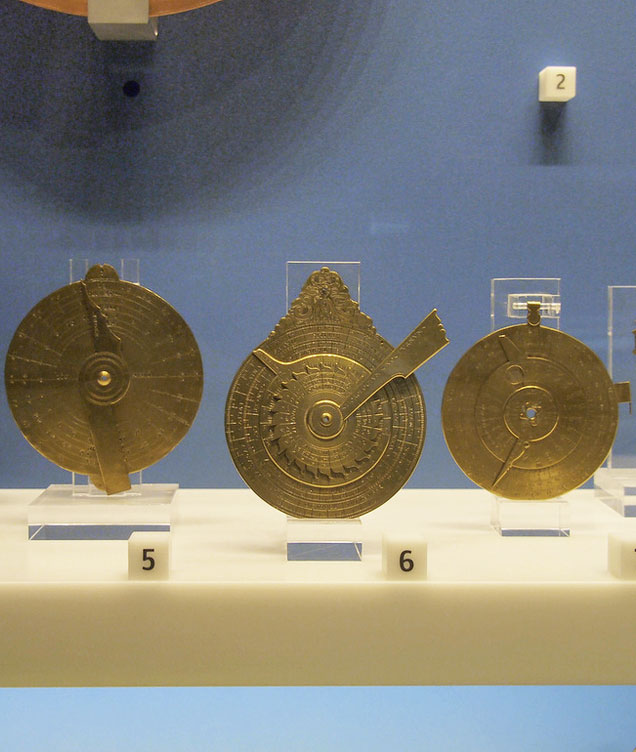
The Science of Navigation
ROOM VI
The Science of Warfare
ROOM VII
Galileo’s New World
ROOM VIII
The Accademia del Cimento: Art and Experimental Science
ROOM IX
After Galileo: Exploring The Physical and Biological World
ROOM X
The Lorraine Collections
ROOM XI
The Spectacle of Science
Rooms XII and XIII
Teaching and Popularizing Science
ROOM XIV
The Precision Instrument Industry
ROOMS XV and XVI
Measuring Natural Phenomena
ROOM XVII
Chemistry and the Public Usefulness of Science
ROOM XVIII
Science at Home
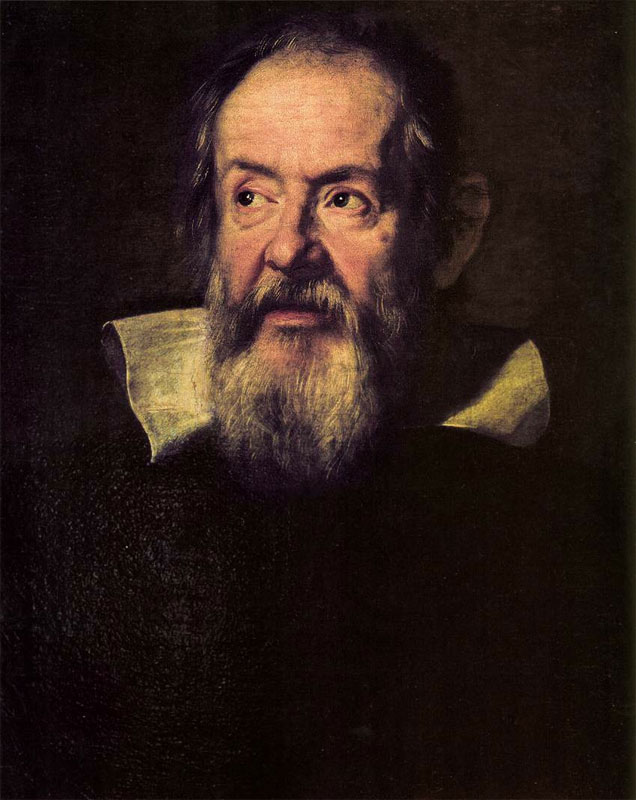
GALILEO GALILEI
1564 - 1642
Galileo, perhaps more than any other single person,
was responsible for the birth of modern science.
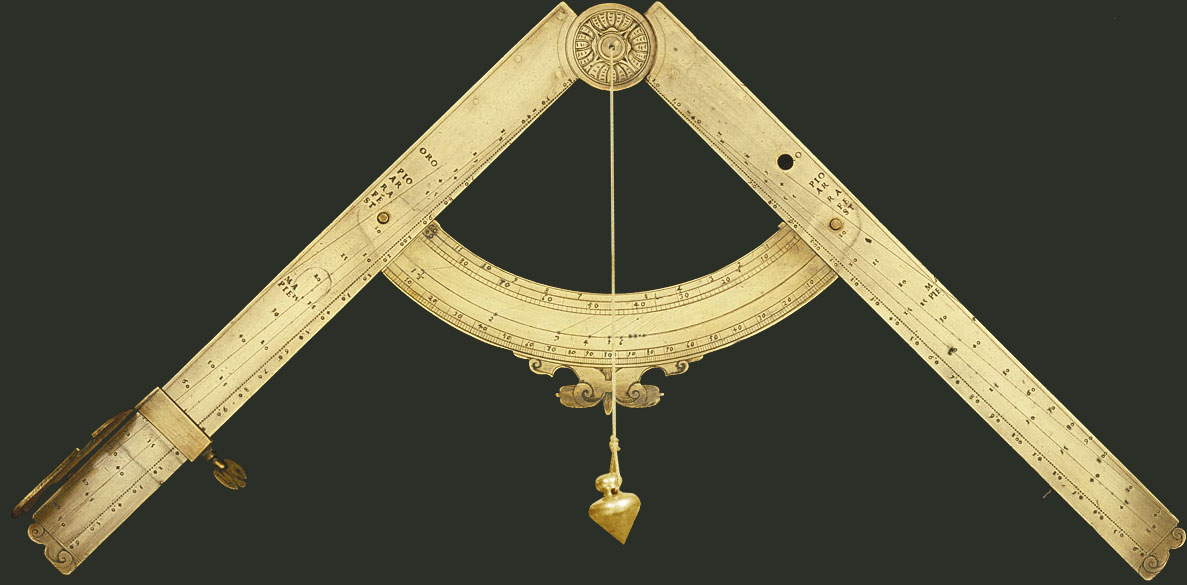
17th
century - Galileo Galilei - Brass
This is one of the instruments made by Galileo from
1597 onwards. This instrument, which should not be
confused with the reduction compass, is a sophisticated
and versatile calculating device. It renders possible
several geometrical and arithmetical operations by
comparing the sides of similar triangles.
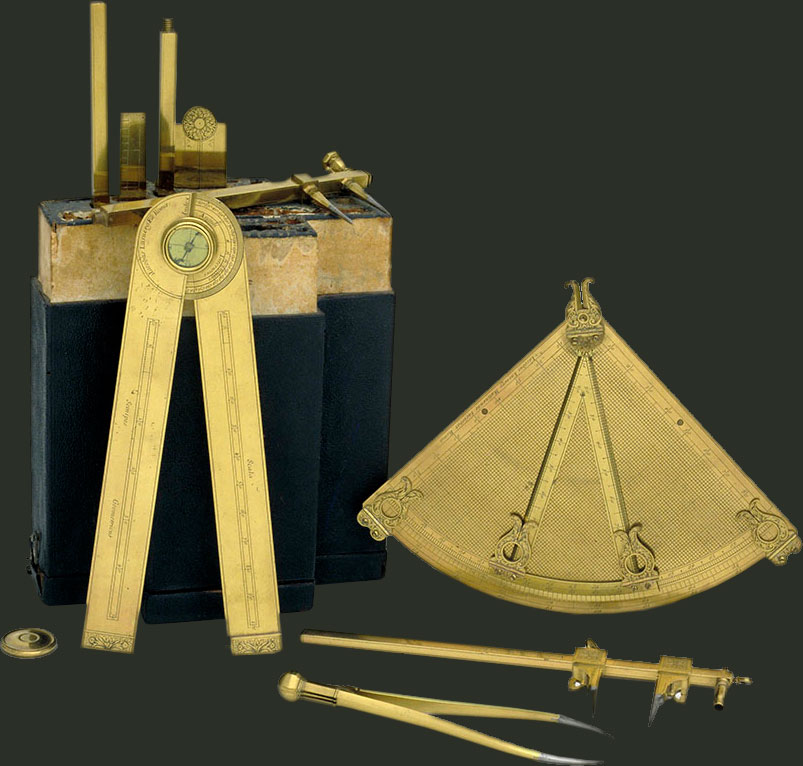
Case of mathematical instruments
Late 17th century
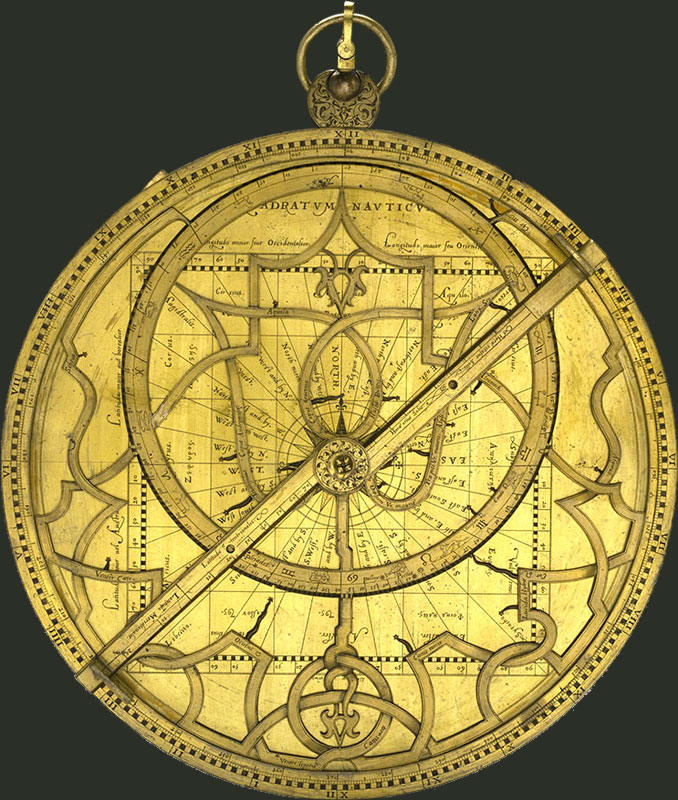
This
astrolabe, attributed to Gerard Mercator, contains
six tympanums for latitudes 43°deg;, 36°deg;,
39°deg; and 42°deg;, 45°°deg; and
48°deg;, 51°deg; and 108°deg;, and
57°deg; and 60°deg; (corresponding to the
regions between North Africa and Sweden); a seventh
tympanum carries the geographic mirror for the
northern and southern hemispheres. Probable provenance:
Robert Dudley bequest to the Medici collections
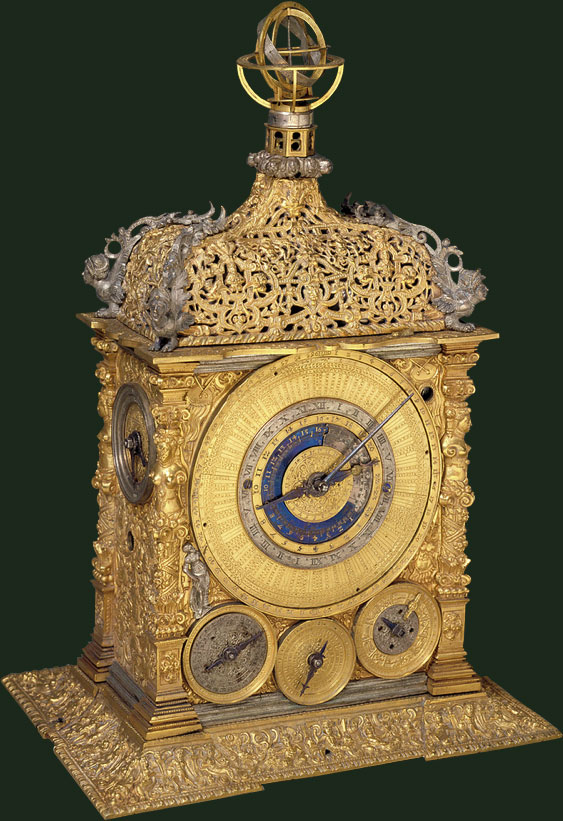
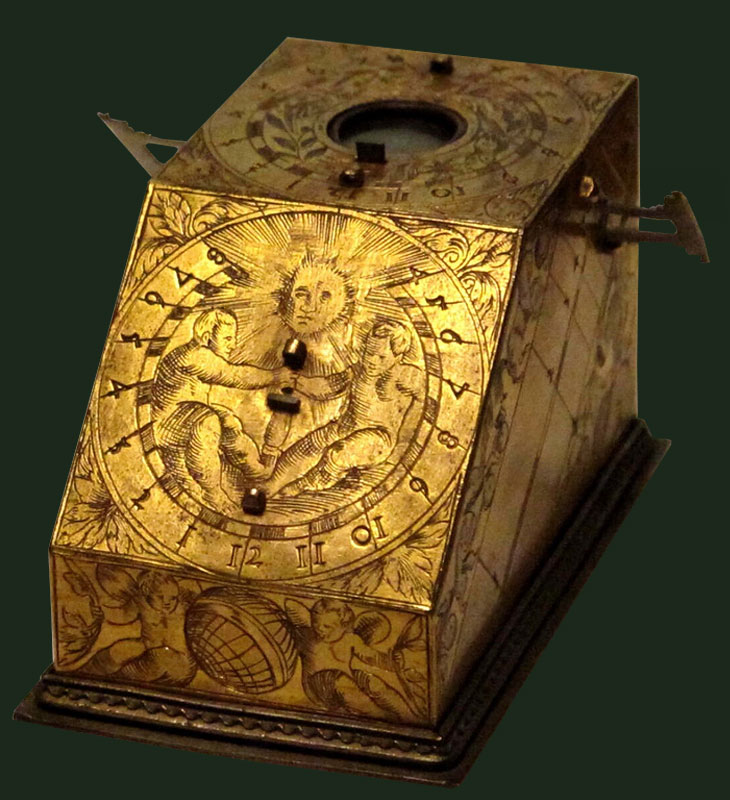
Table
clock
Attributed to Caspar Rauber, Germany c.
1575
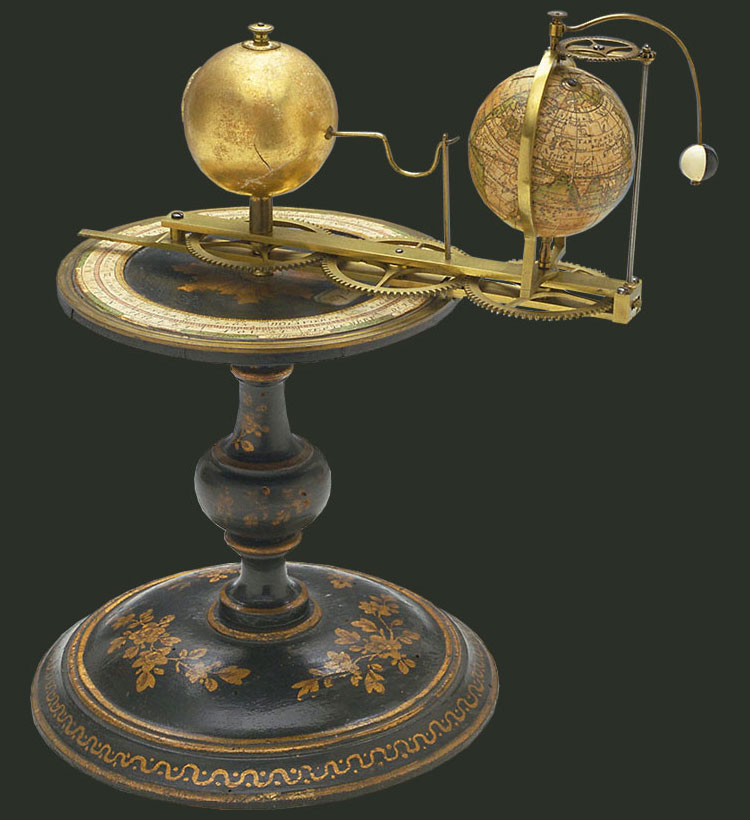
Tellurium
Copernican planetarium
model to illustrate
terrestrial and lunar revolutions around the
sun
Attributed
to Charles-François Delamarche, c. 1800
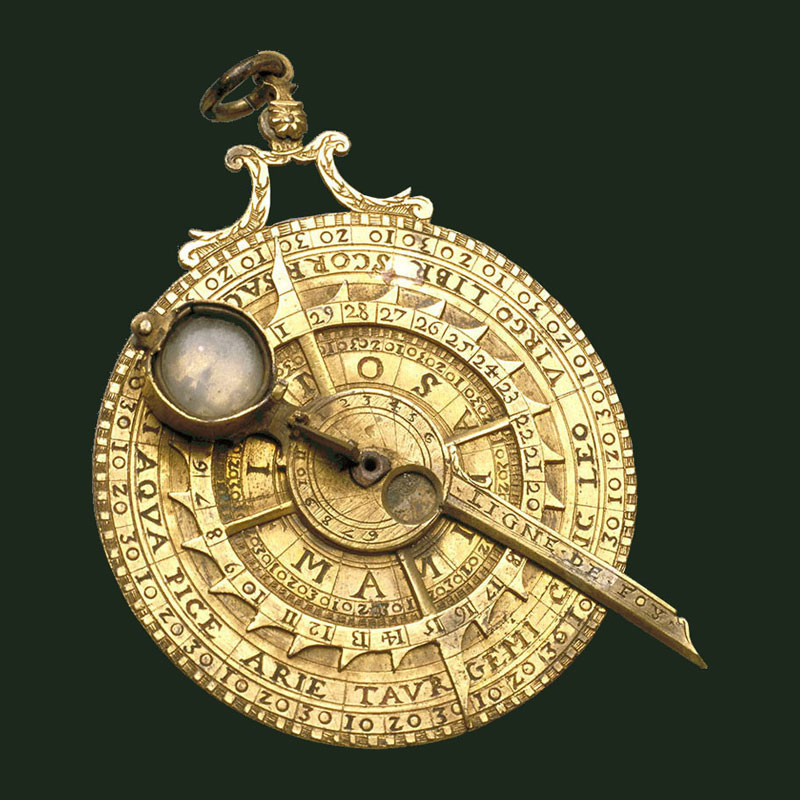
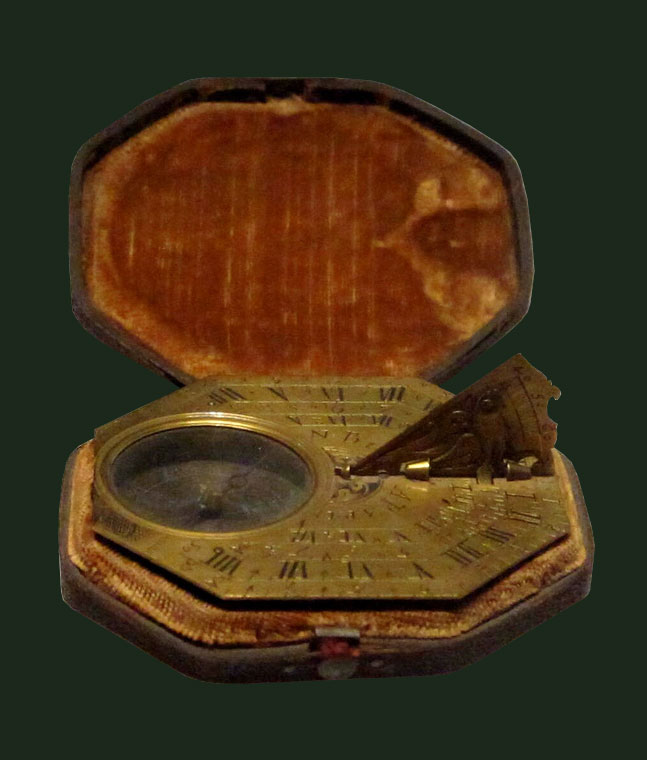
Nocturnal
Dial consisting of a disk engraved on both sides.
The recto bears markings for the zodiac signs,
months, and days. On it rotates a circle
divided into 29 parts and carrying two indexes;
on this circle is a small rotating disk fitted
with a gnomon, a compass, and an index with
the French inscription - Ligne de foy - [line
of trust]. On this side the instrument could
be used either as a sundial or a nocturnal.
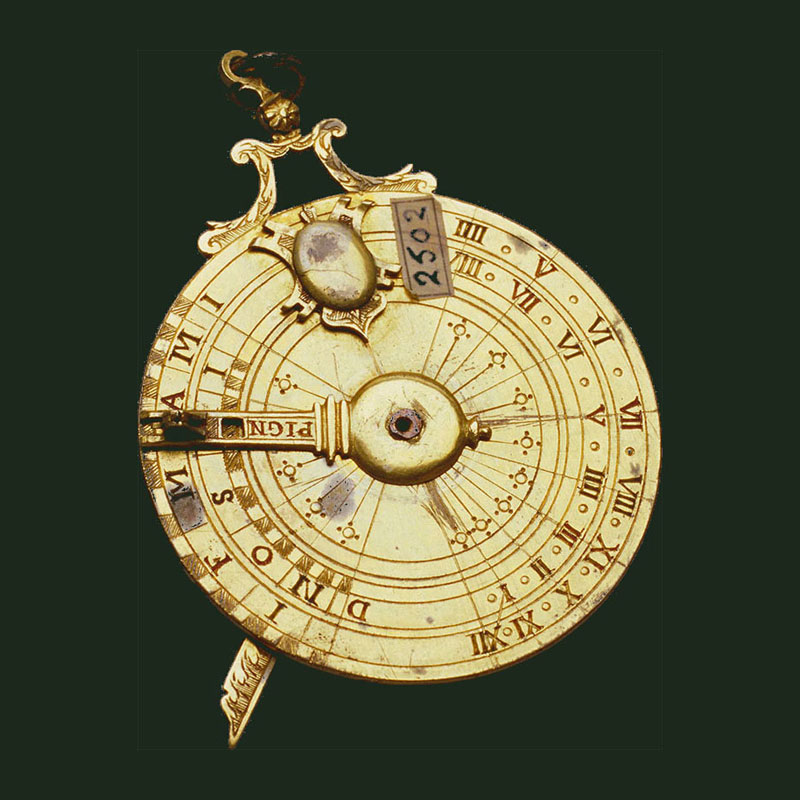
The verso carries the hour lines and a small
tilting gnomon. There is a suspension ring.
The inscriptions in French and the word -
Pign - engraved on the index suggest the
instrument was made by a craftsman named
Pineau, on whom we have no information. Probable
provenance: Medici collections
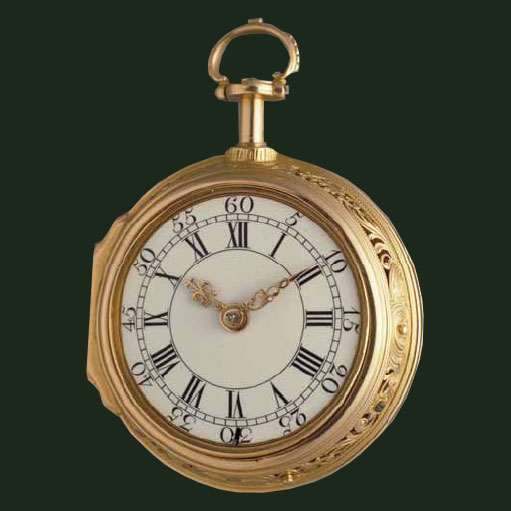
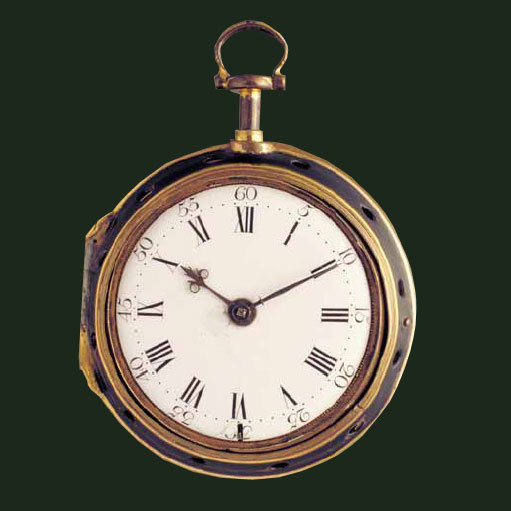
Double-case watch
John Ellicott (watch), Georg-Michael Moser
(case)
London - c. 1754
Double-case watch
Daniel Quare
London - late 17th century
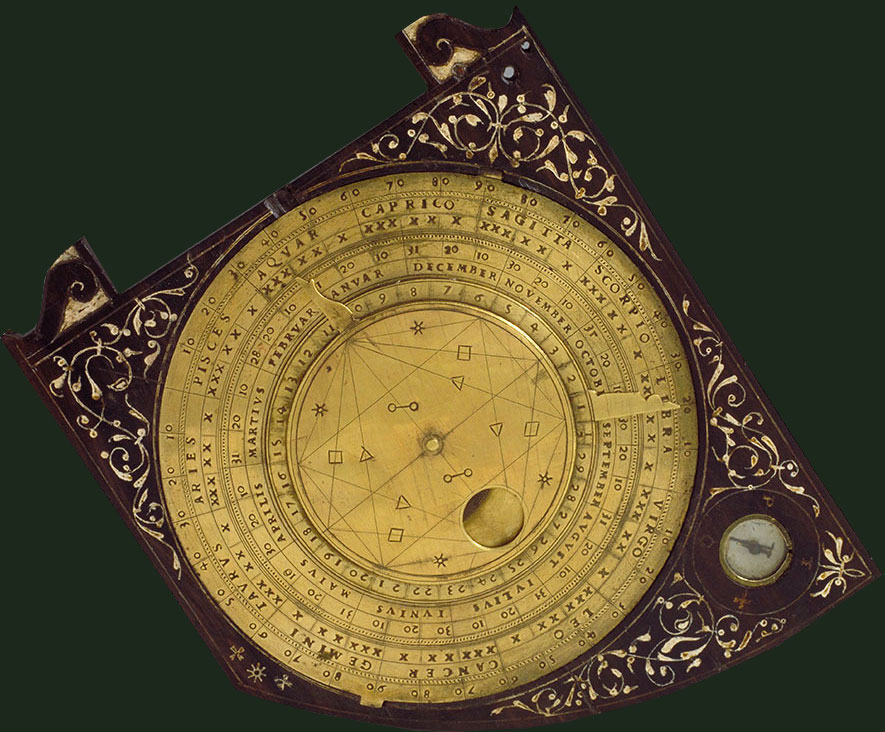
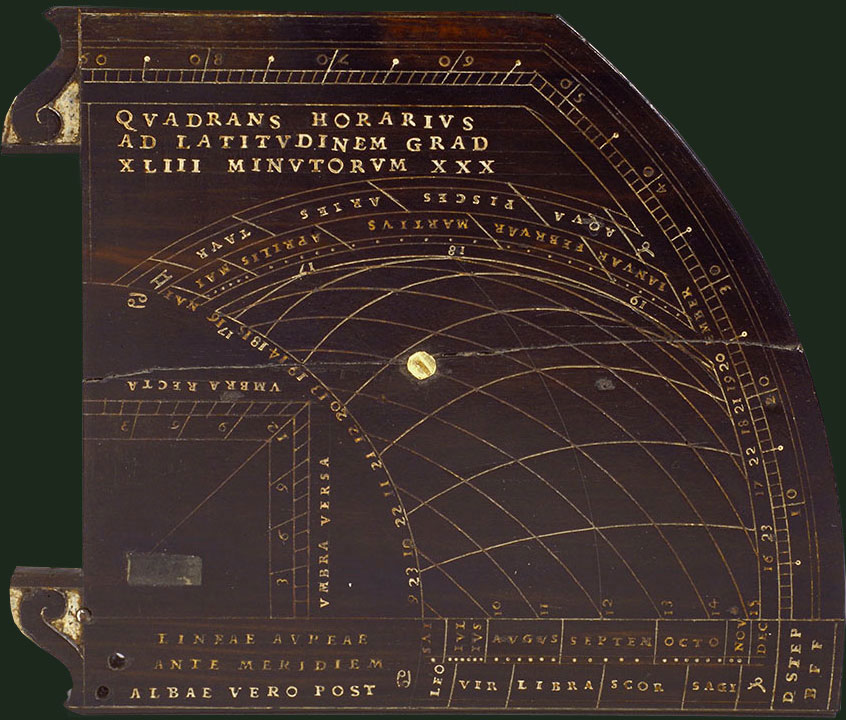
Horary quadrant
The front of this finely decorated quadrant carries
(1) a brass disk with markings for days, months,
and zodiac signs, and (2) a moon dial. There
is a magnetic compass for orientation. On the
back of the instrument are a shadow square,
a degree scale, and a sundial with unequal
hour lines set for latitude 43°30' (Florence).
Made by Stefano Buonsignori, as
indicated by
the initials - D.STEP. B.F.F.- [Stefano Buonsignori
Florentinus Fecit]. Provenance: Medici collections
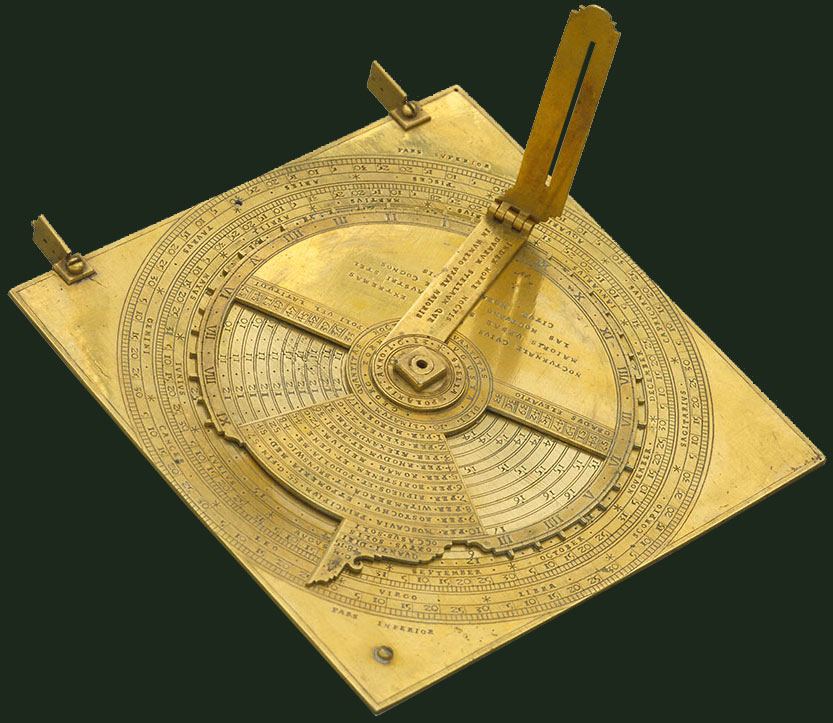
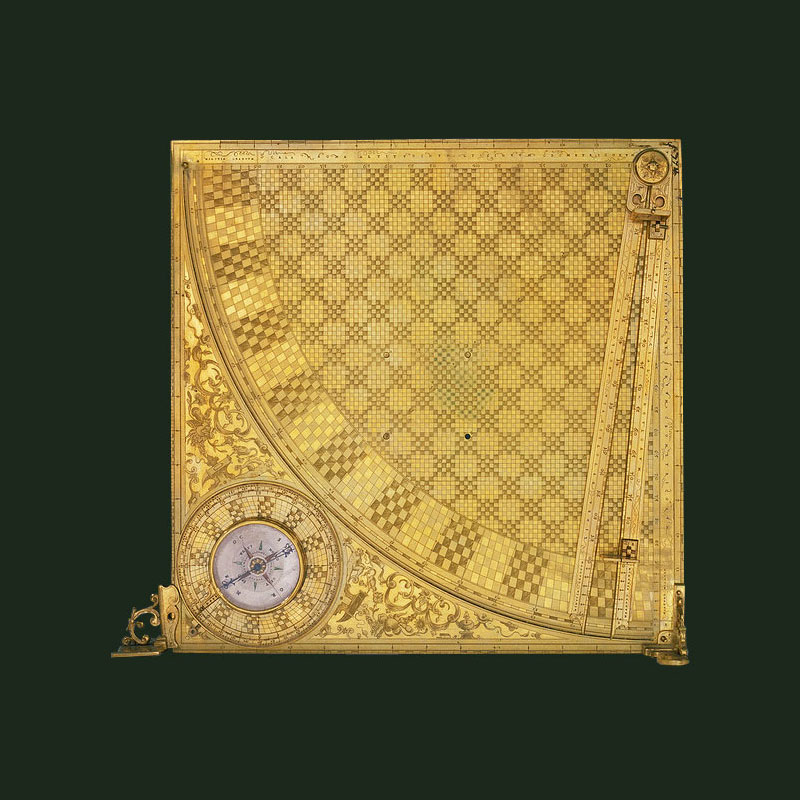
Nocturnal and sundial
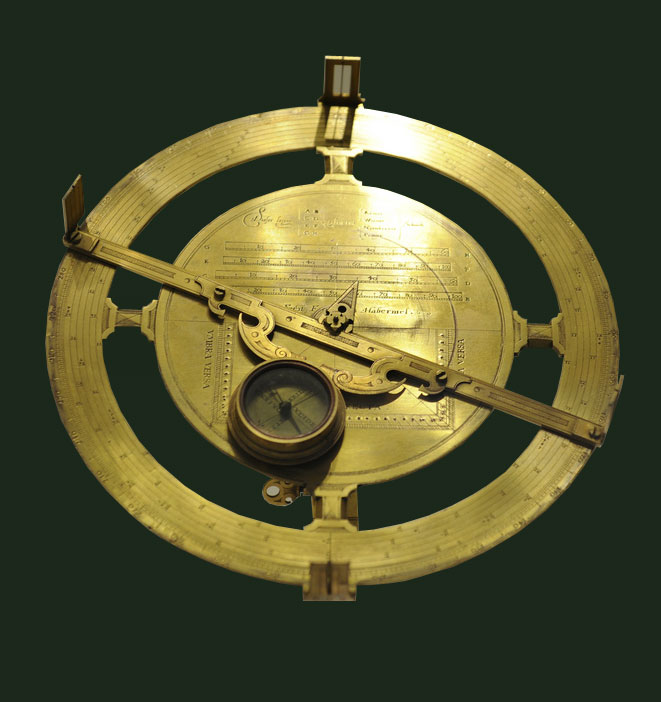
Disk with folding index arm rotating on a square plate carrying fixed sights for altitudes. The diurnal hours and night hours are marked for several latitudes. There are also markings for the climates. On the back are a nocturnal and sundial, a 90° quadrant with a shadow square, and the sine scale. Made by Georg Zorn, about whom we have no information. Brought to Florence from Germany by Prince Mattias de' Medici in the first half of the seventeenth century.
Astronomical compendium
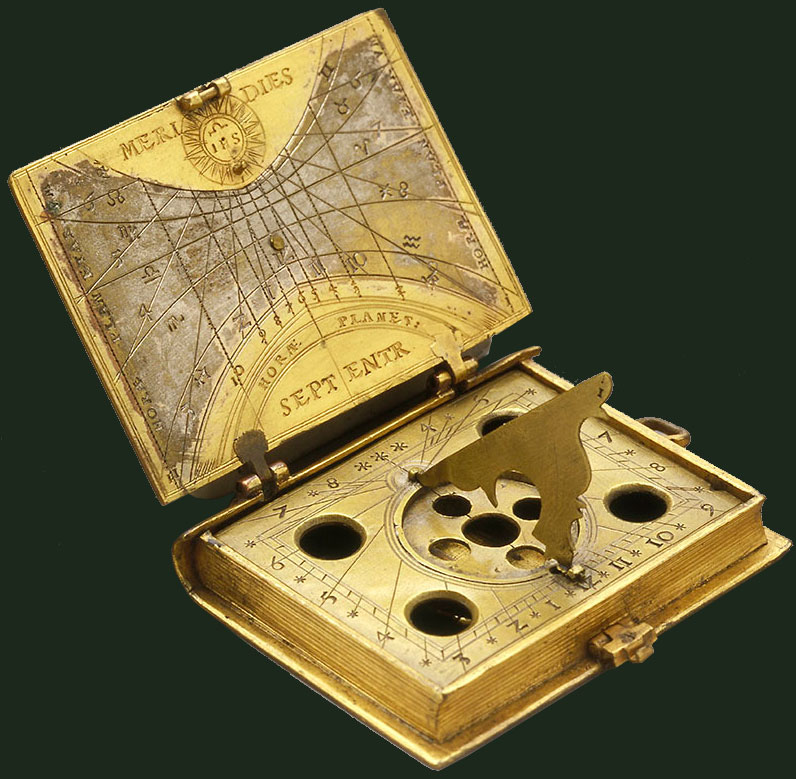
This astronomical compendium, in the shape of a Missal, carries the coat of arms of the Company of Jesus (IHS). The outer face of the lid bears a lunar dial showing the phases of the moon; the inner face is engraved with the hour lines. Inside, there is a tilting gnomon mounted on a compass (now missing), that ensured the instrument's correct orientation and allowed its use as a dial. The back of the book displays the planetary hours.
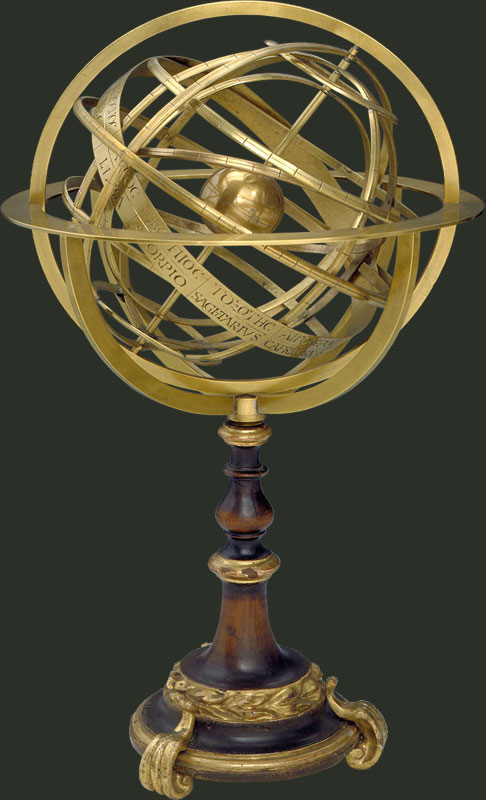
Armillary sphere
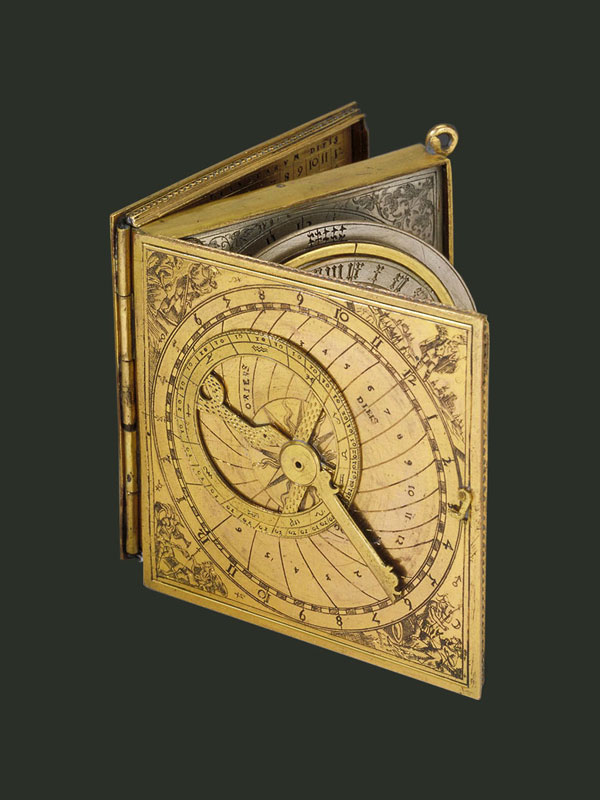
Astronomical compendium consisting of a box with three compartments. In the first, there is an astrolabe and a lunar calendar. Between the first and second compartment is an hour circle. The second compartment houses a sundial and a magnetic compass for orientation. The third compartment contains the Horae planetarum table and an horary quadrant with a shadow square. The markings are in German.
Astrolabe
Solar clock
Pocket Quadrant
Quadrant
Planetary
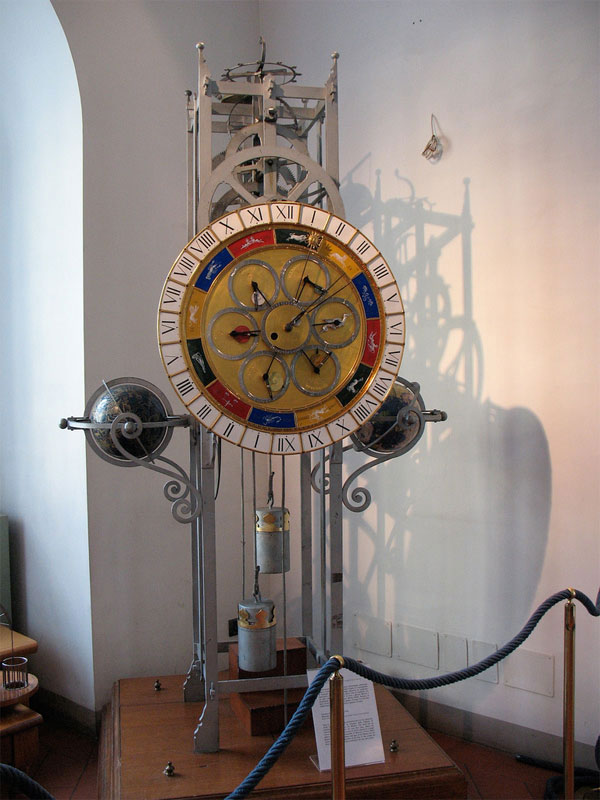
clock by Lorenzo della Volpaia -
1510
Faithful working replica of the planetary clock designed and built by Lorenzo della Volpaia in 1510 to the commission of Lorenzo de' Medici, now lost. The clock's dial was highly innovative in design, allowing the motions of all the planets to be seen at a glance for the first time. It showed the motions of Mercury, Venus, Mars, Jupiter and Saturn, the phases and age of the Moon, the mean motion and true position of the Sun. It also indicated the time (by striking the hour), the day and the month. The wheelwork, drawn by a single weight, operated with a verge escapement and a regulator ring.
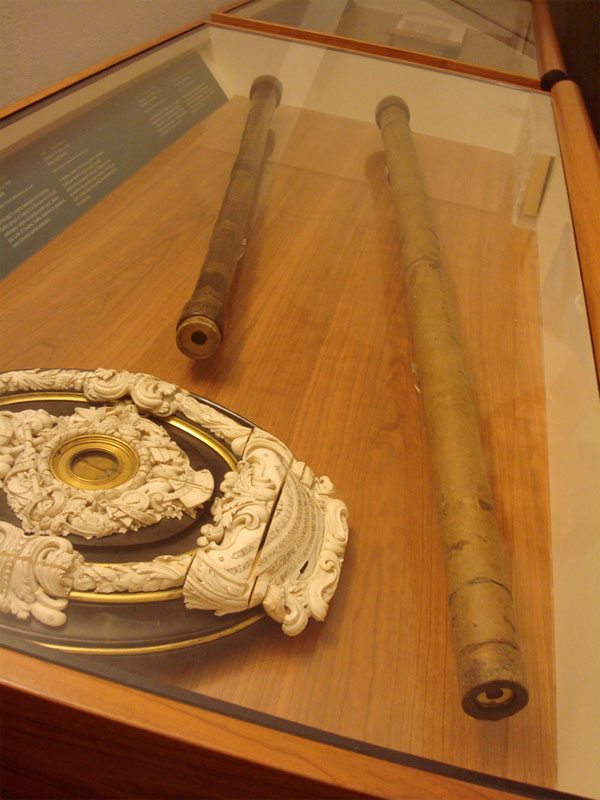
Galileo's
telescope
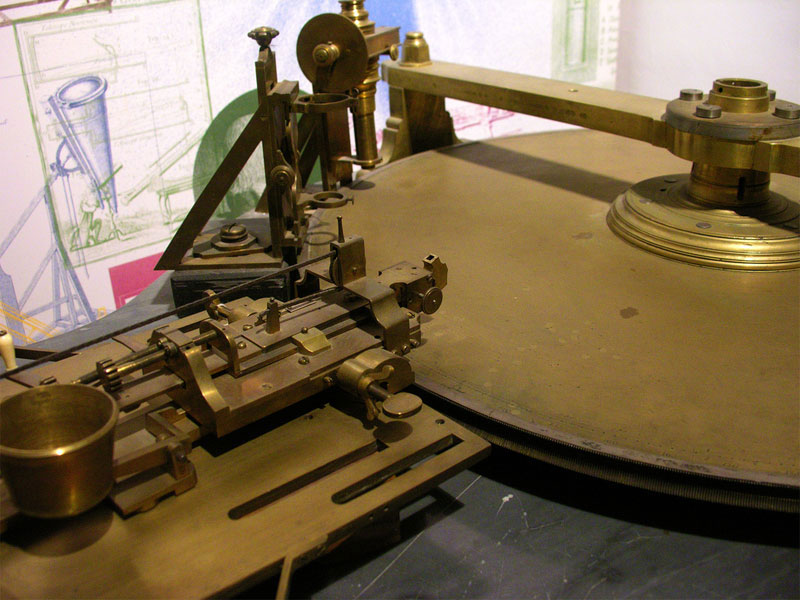
Circle-dividing
engine - 1762
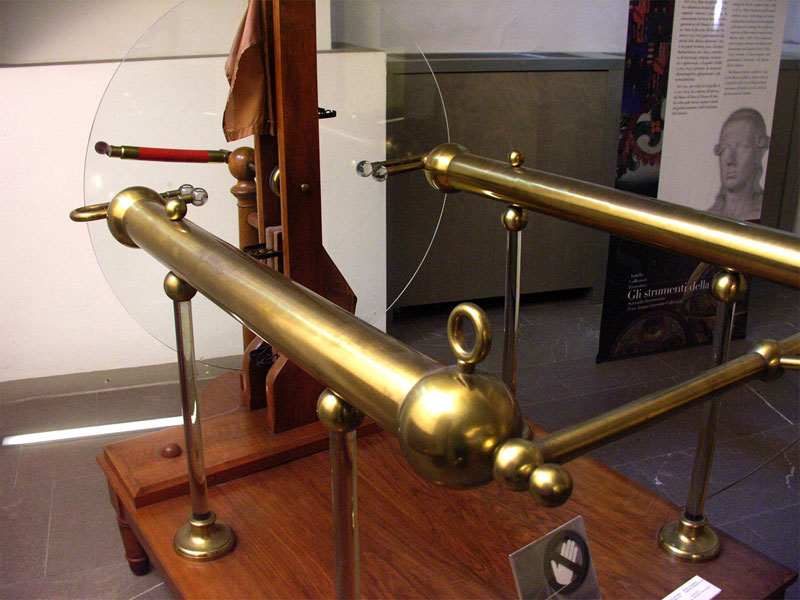
Frictional electrical machine with glass disk rubbed by four leather cushions. The prime conductor consists of two brass tubes with spherical ends connected by a cross-tube fitted with an electrode, resting on glass supports; they terminate in jaw-collectors to facilitate the transfer of the charge at both sides of the glass disk. Positive charge is taken from the prime conductor, while negative charge is taken from the hook at the top of the machine.
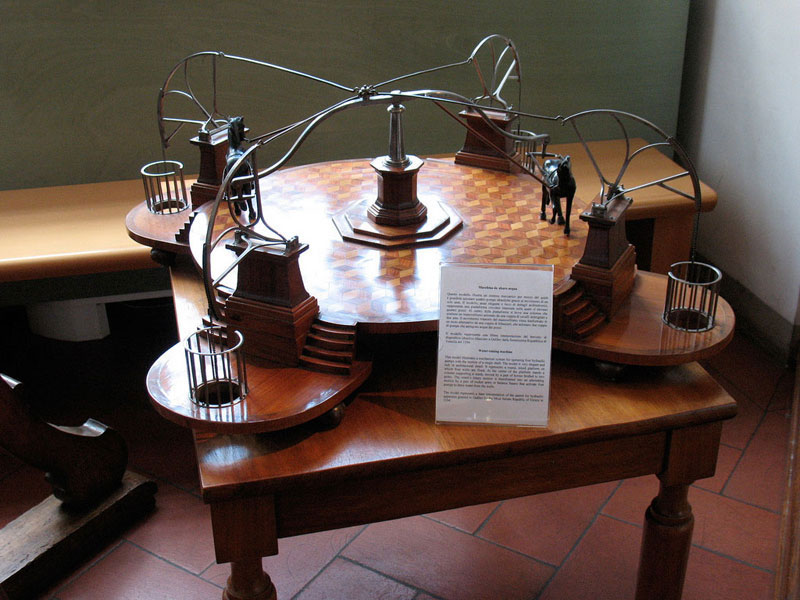
Water-raising machine
Apparatus
to demonstrate
the parabolic trajectory of projectiles
Maker unknown, late 18th century