In 1219 twelve Dominican friars led by Fra Giovanni
da Salerno came from Bologna and two years later
obtained as their Florentine dwelling the church
of Santa Maria delle Vigne, outside the city walls.
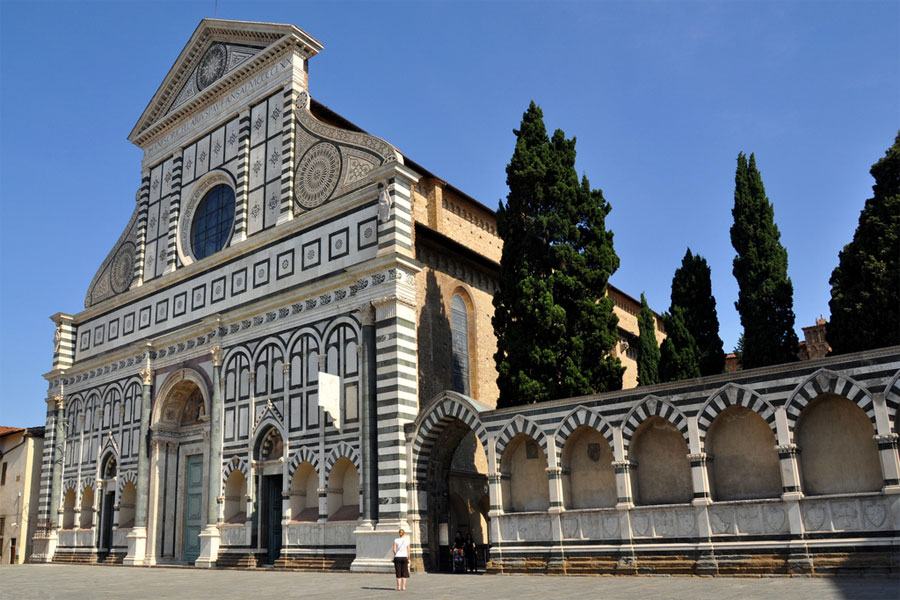
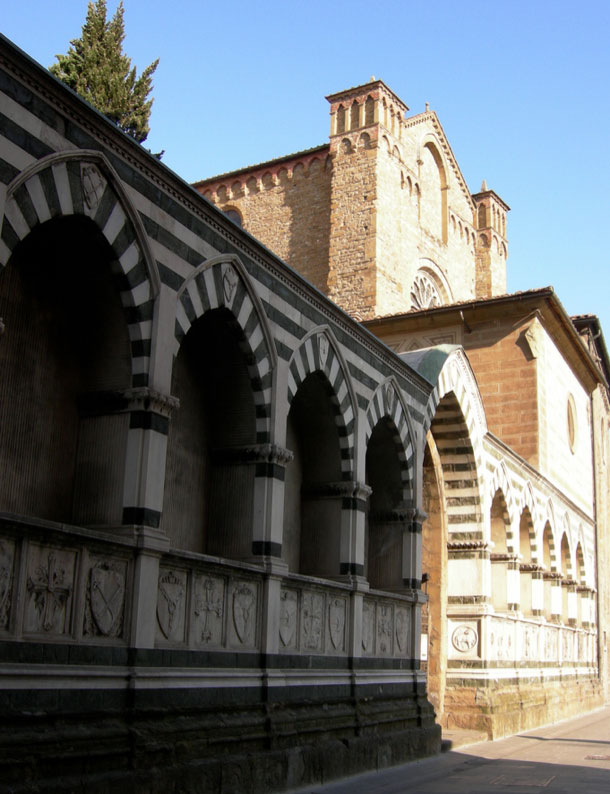
The much larger church we see today was begun
in 1279 to a design by two Dominican converses,
Fra Sisto and Fra Ristoro, and was almost concluded
with its adjacent convent by the middle of the
14th century.
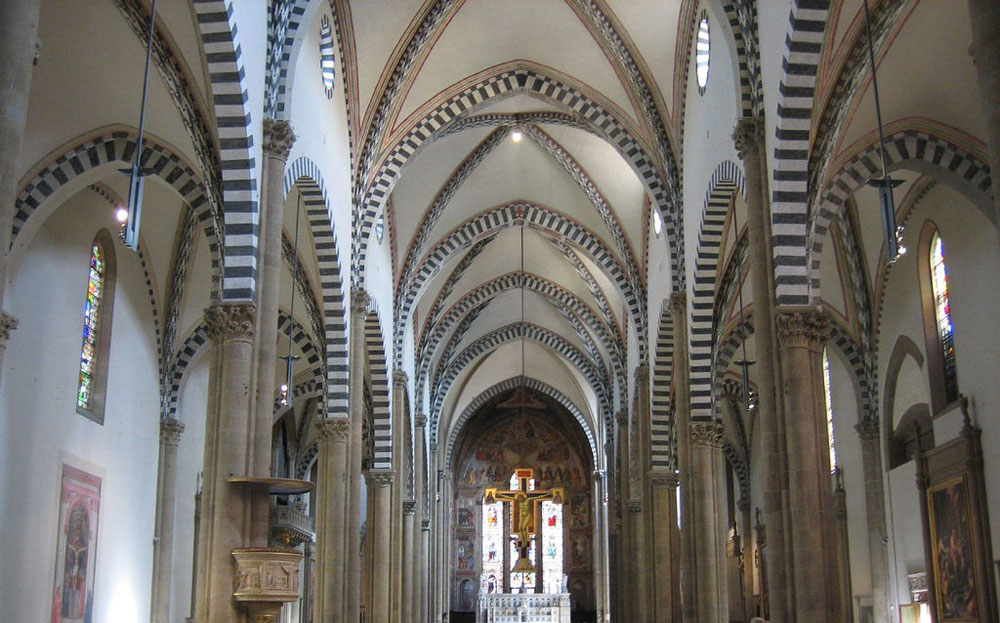
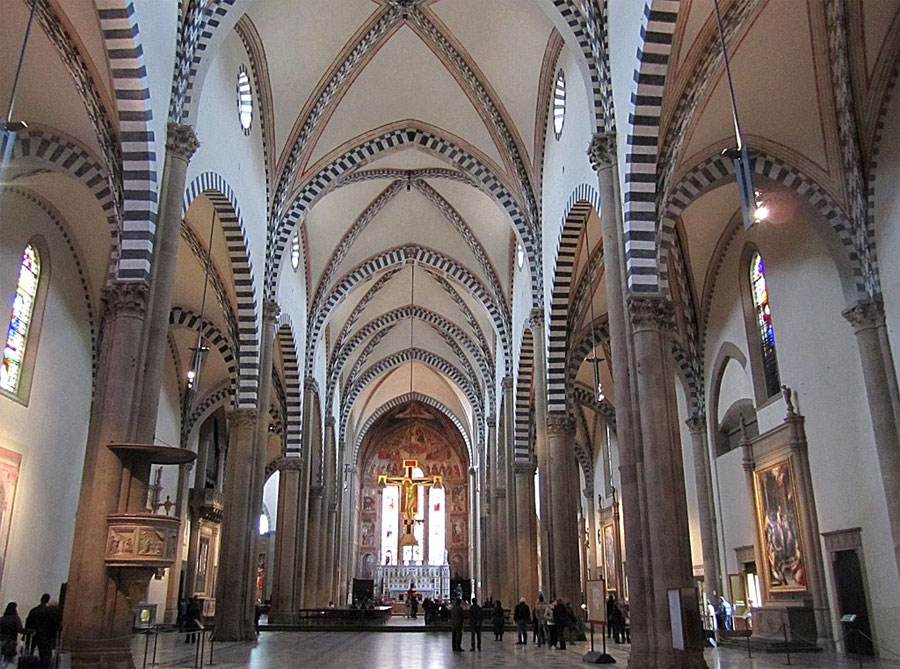
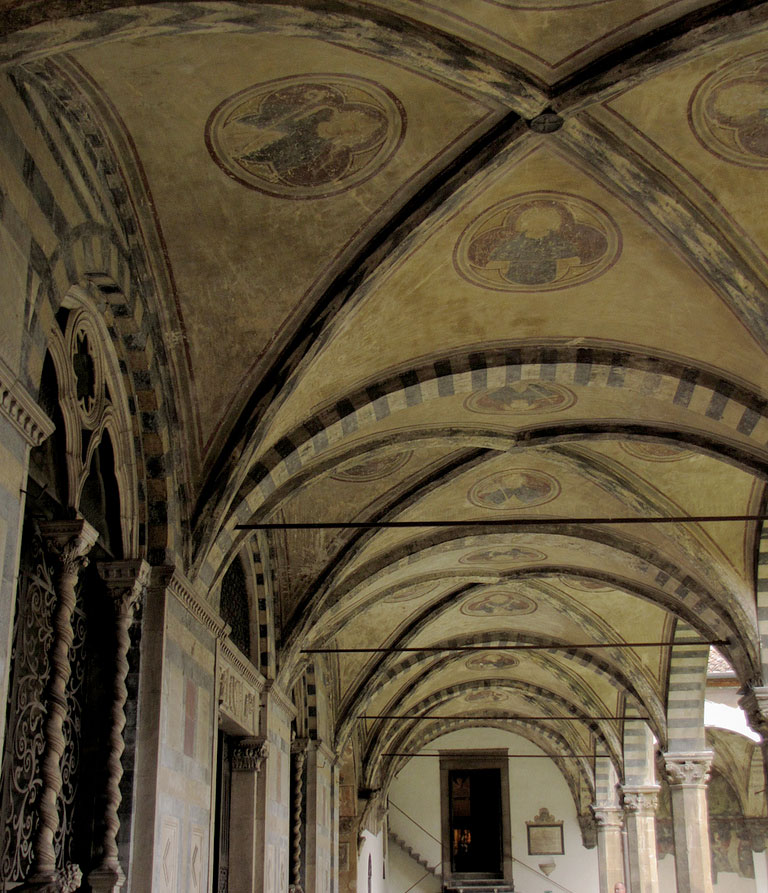
Its internal structure resembles
that of Cistercian gothic churches, the nave being
separated from the aisles by wide bays and covered
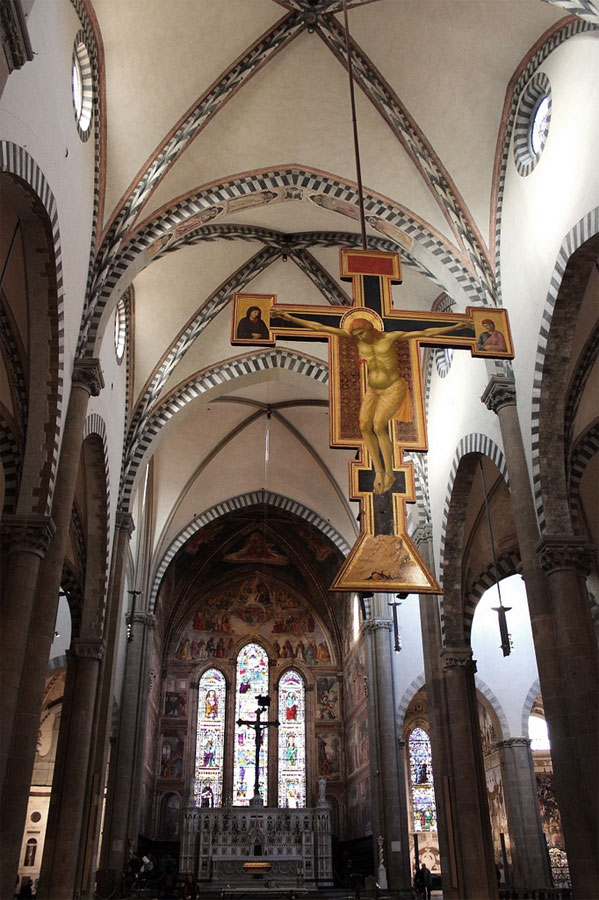
with gothic vaulting. Among the first works of
art to reach the church was Duccio’s Maestà
(1285), known as the ‘Rucellai Madonna’,
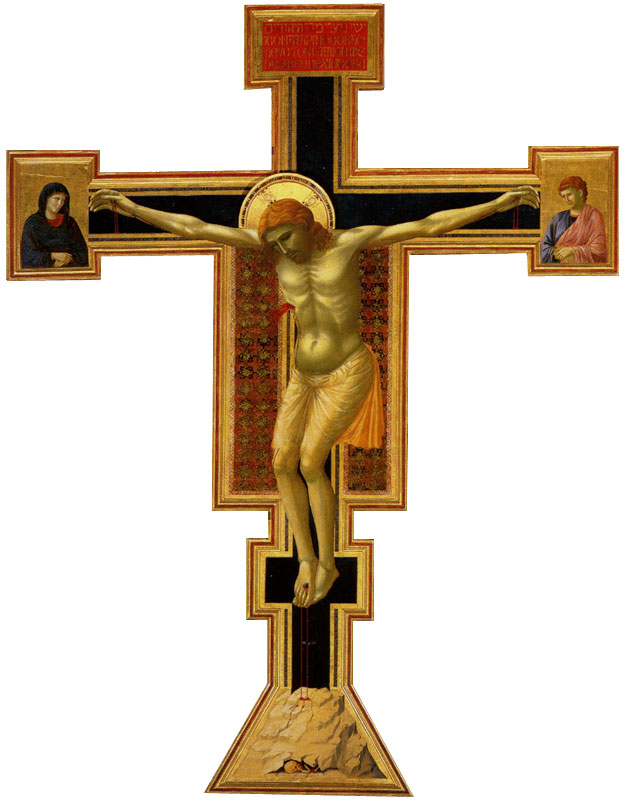
which is now in the Uffizi; the Crucifix documented
inside the church in 1312 was painted by the young
Giotto.
The major 14th-century
decorative schemes
that have come
down to us date
from the years
after the Plague
of 1348. In the
left transept,
between 1350 and
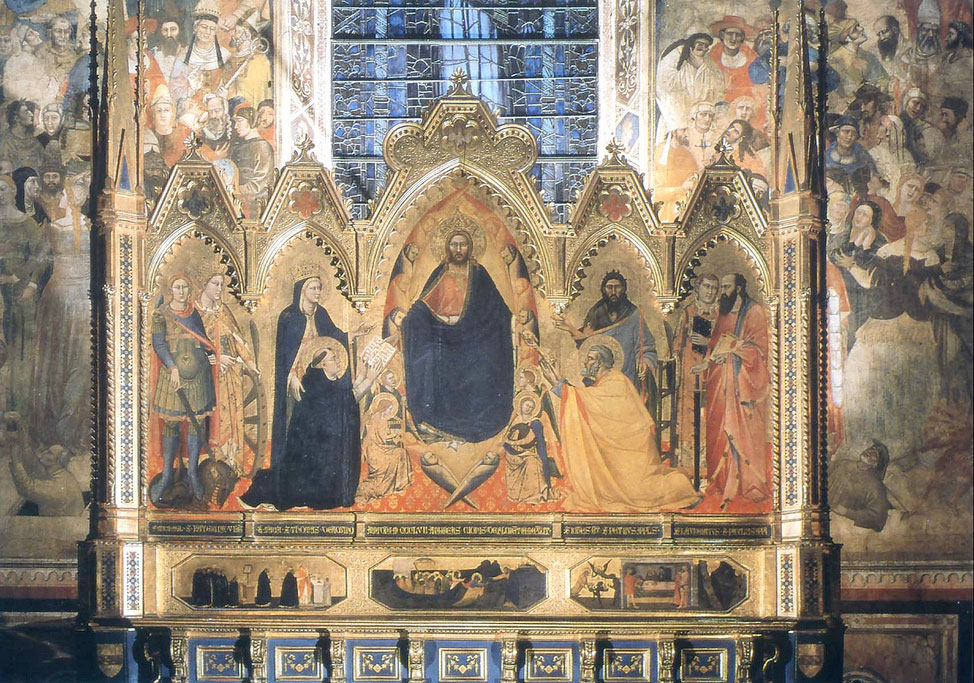
1357, Nardo di
Cione frescoed
the walls of the
Strozzi Chapel
with the Last
Judgement, Hell,
and Paradise; the
stained glass
is also by Nardo.
On the altar the
panel, signed
and dated 1357,
with Christ giving
the Keys to St.
Peter and a Book
to St. Thomas Aquinas,
with the Madonna,
St. John the Baptist
and other Saints,
and its predella,
are the work of
Nardo’s
brother, Andrea
di Cione, known
as Orcagna (signed
and dated 1357).
Between 1367 and
1369 Andrea di
Bonaiuto frescoed
the convent’s
chapter room,
known as the ‘Spanish
Chapel’:
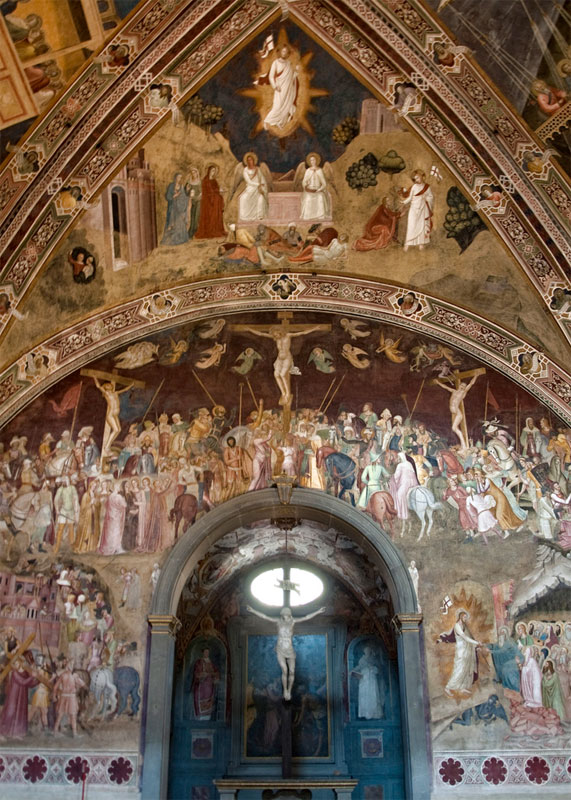
on the altar wall
are the scenes
of the Passion,
Crucifixion and
Descent of Christ
into Limbo; on
the entrance wall
are Scenes from
the life and miracles
of St. Peter Martyr;
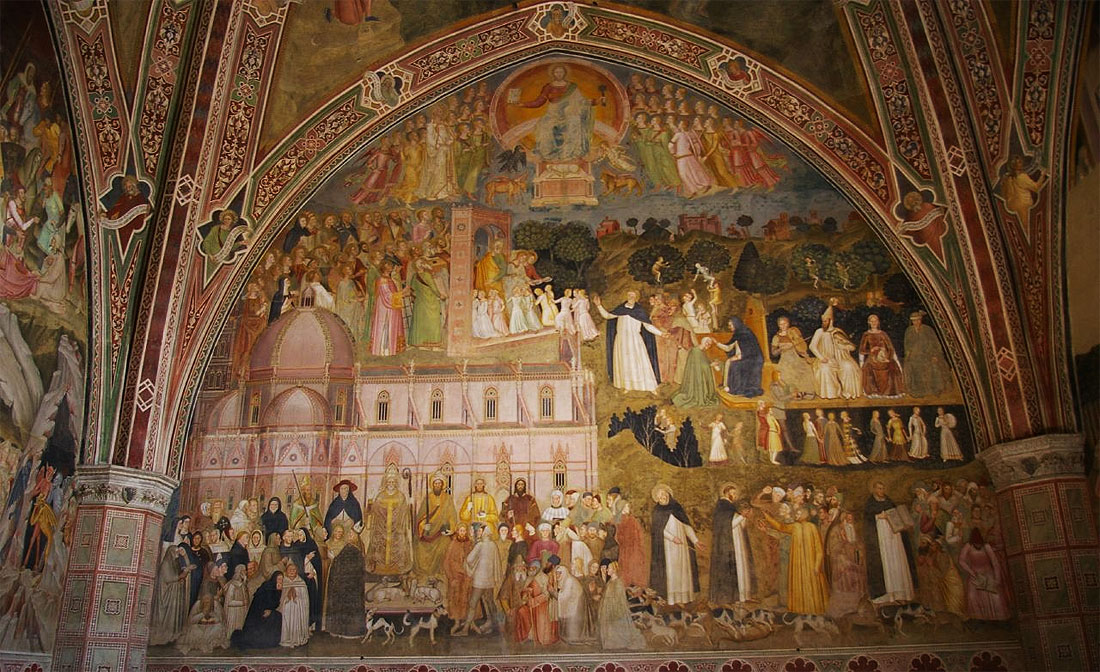
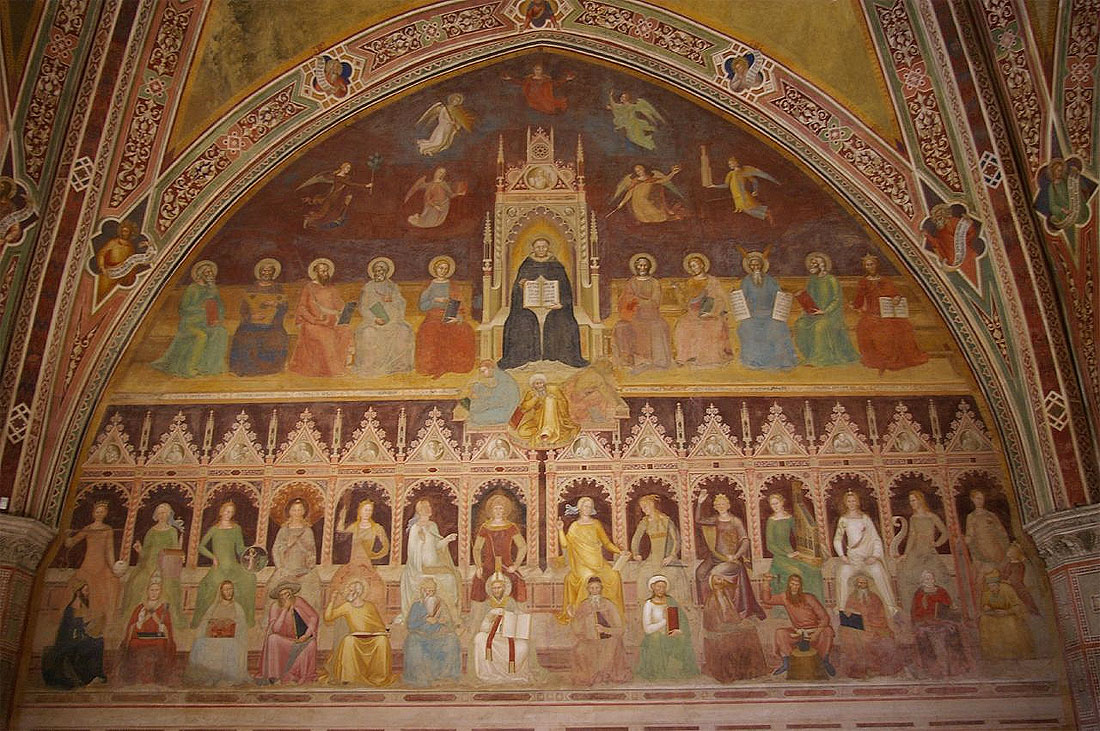
the right-hand
wall has an Allegory
of the Church Militant
and Triumphant,
and the left-hand
wall the Triumph
of St. Thomas
Aquinas. The segments
of the vault have
the Resurrection,
Ascension, Barque
of St. Peter and
Pentecost.
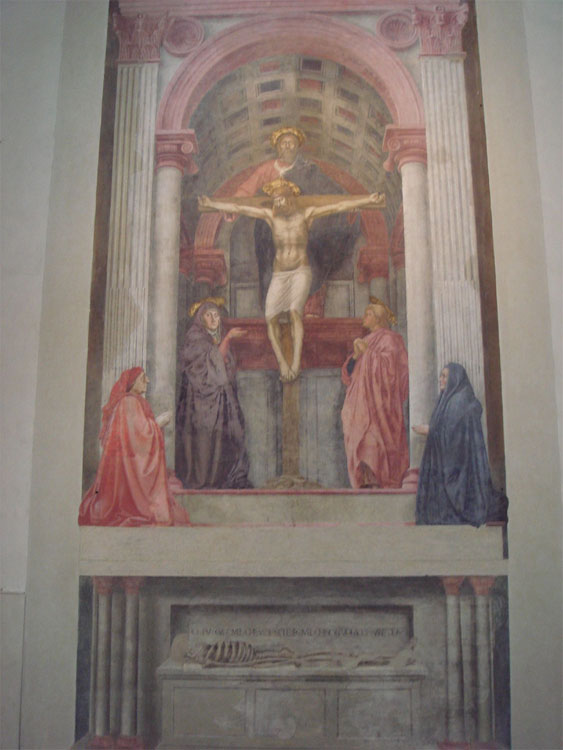
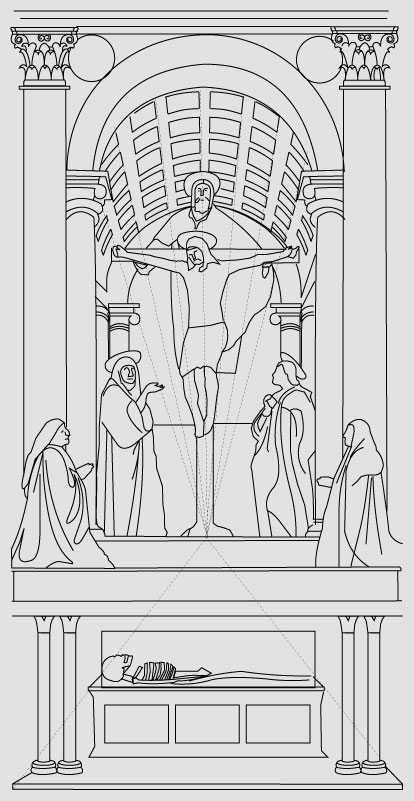
The Renaissance
style was introduced
into Santa Maria
Novella with Masaccio’s
celebrated fresco
of the Trinity
with the Madonna,
St. John the Evangelist
and two patrons
(1427). Filippo
Brunelleschi’s
wooden Crucifix
in the Gondi Chapel
was intended, according
to Vasari, as
a response to the
vigorous naturalism
of Donatello’s
version in Santa
Croce. In 1439
Santa Maria Novella
was the scene
of the Council
of Florence, convoked
to bring about
the reunion of
the Greek and Latin
Churches. Pope
Eugenius IV stayed
for many months,
and it was a brilliant
moment in the convent’s
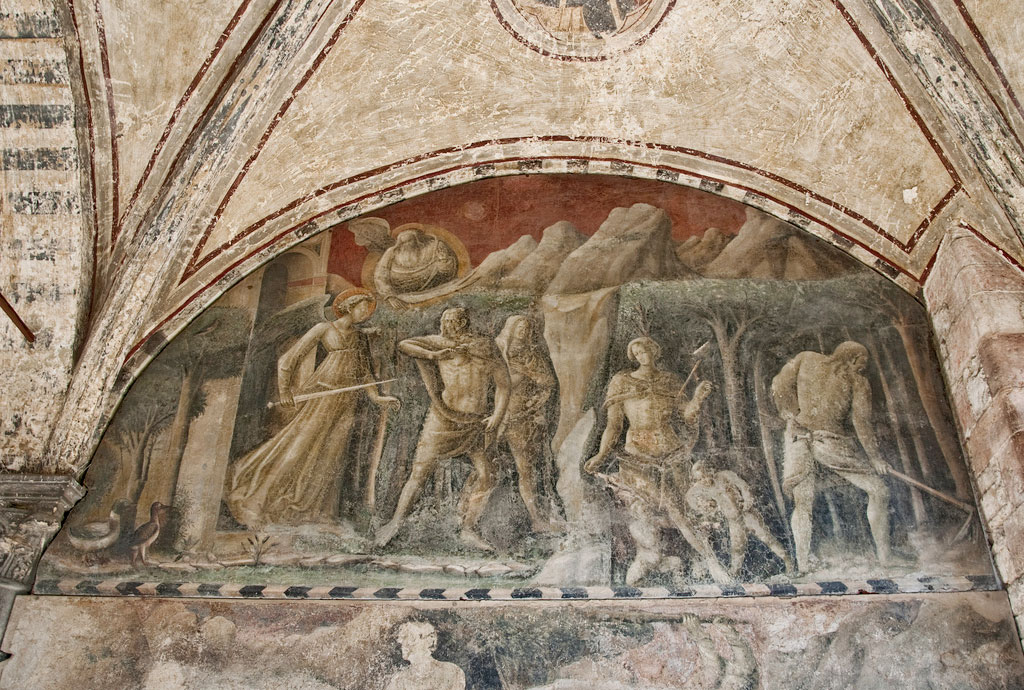
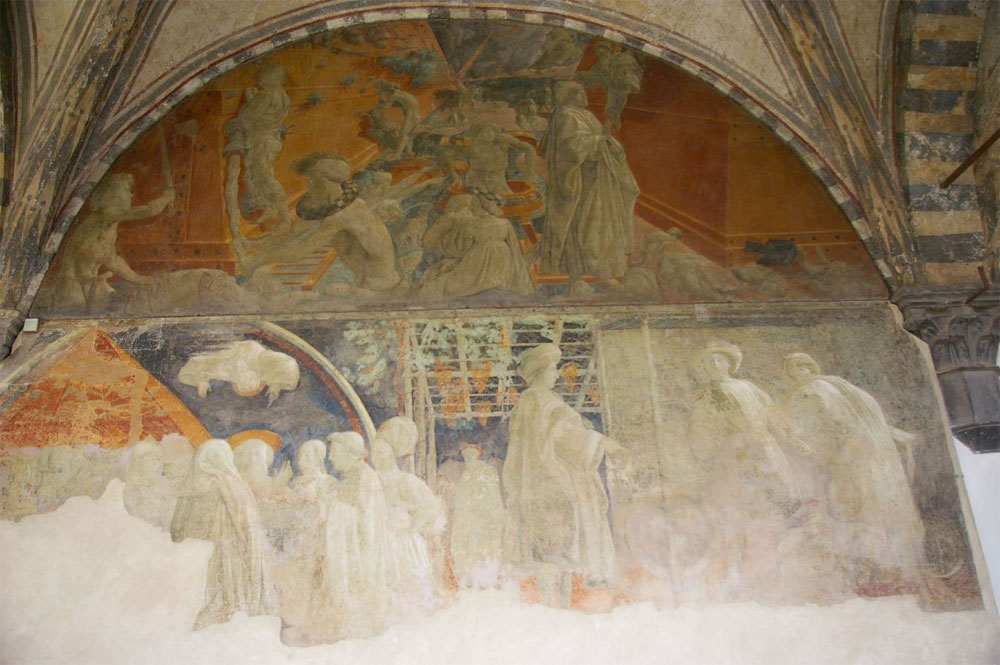
history. Subsequently
Paolo Uccello painted
Scenes from the
Life of Noah in
the Green Cloister,
and Leon Battista
Alberti completed
the church’s
façade
in 1470. Towards
the end of the
15th century
two important
fresco cycles
were painted
for the church
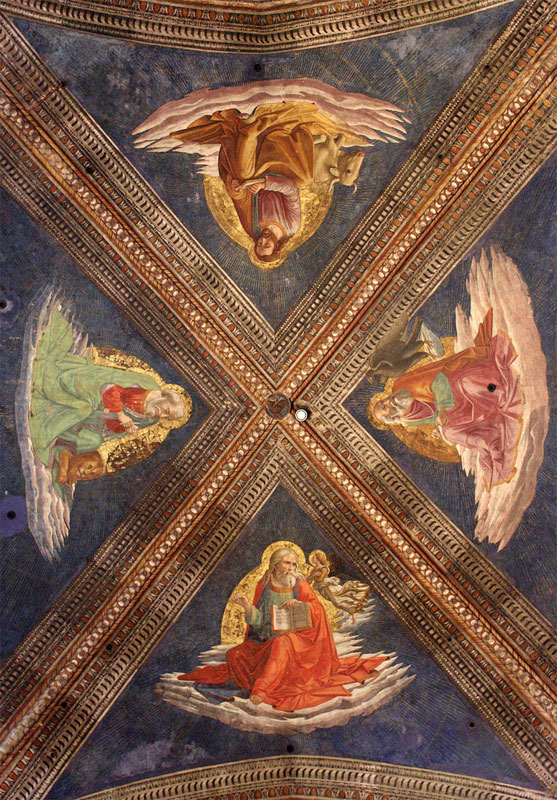
by Domenico Ghirlandaio
and Filippino
Lippi.
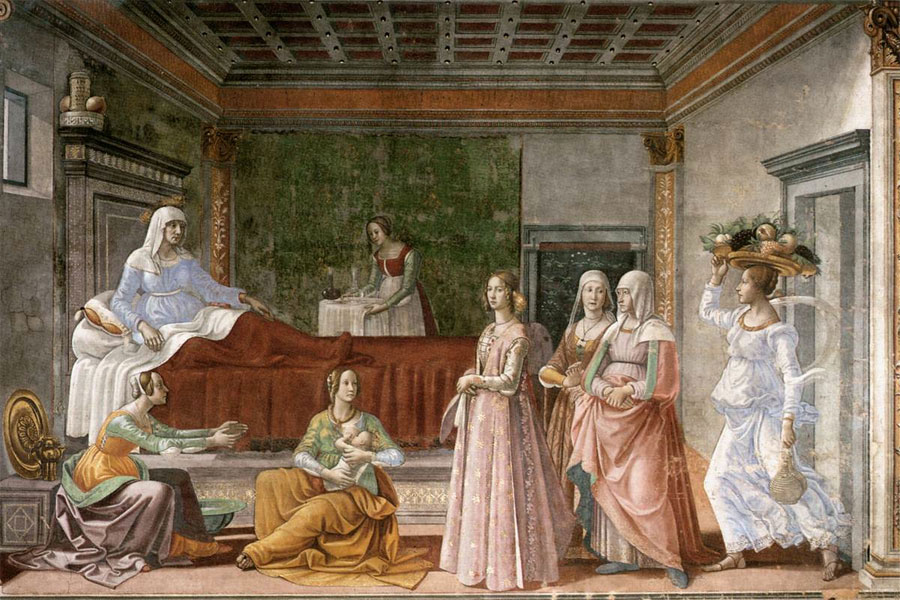
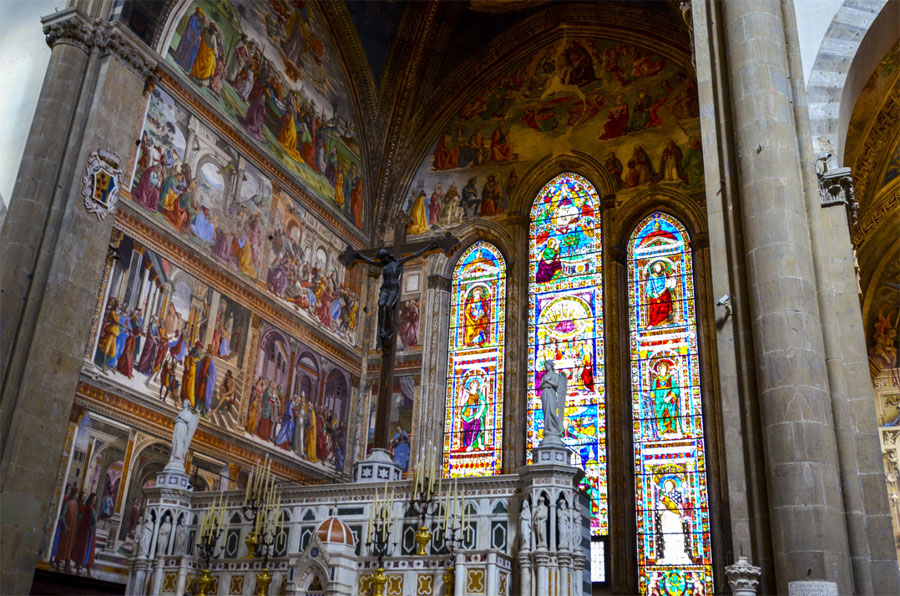
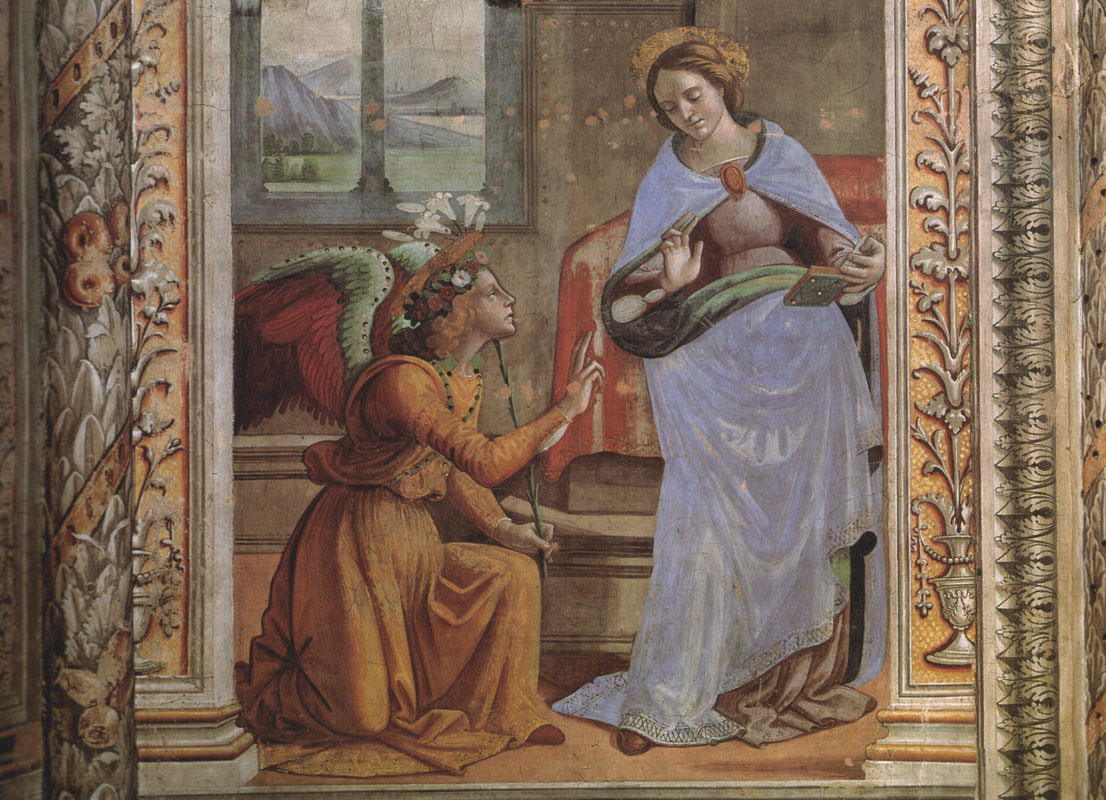
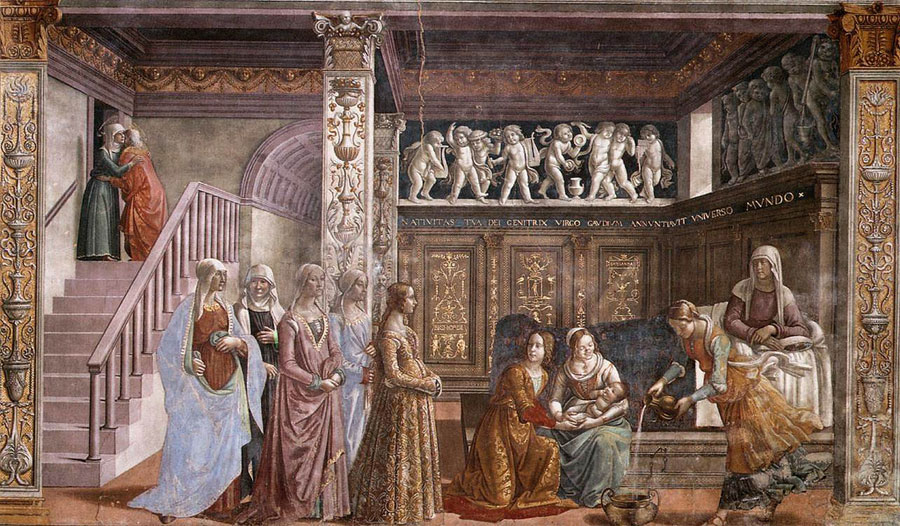
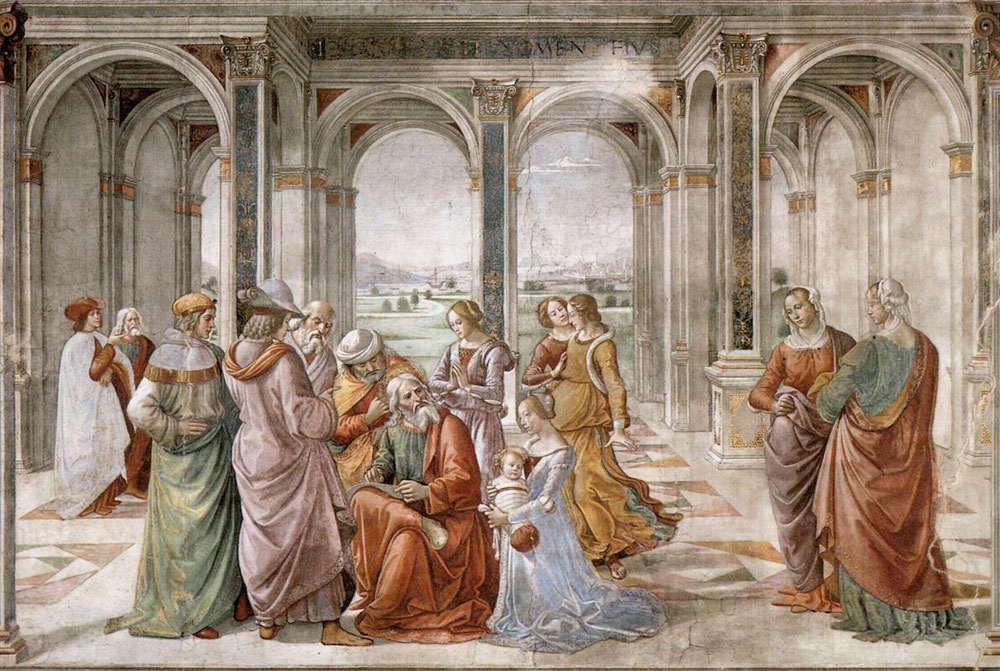
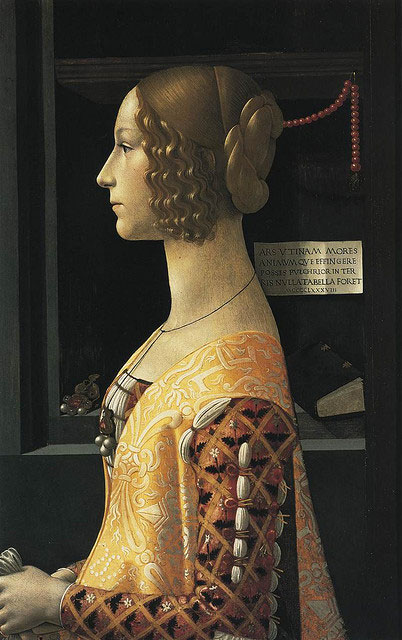
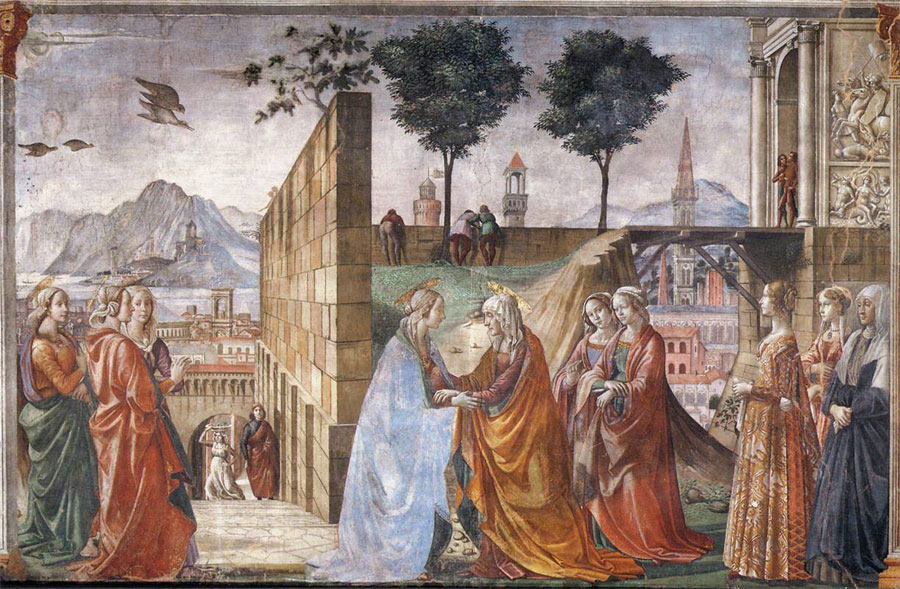
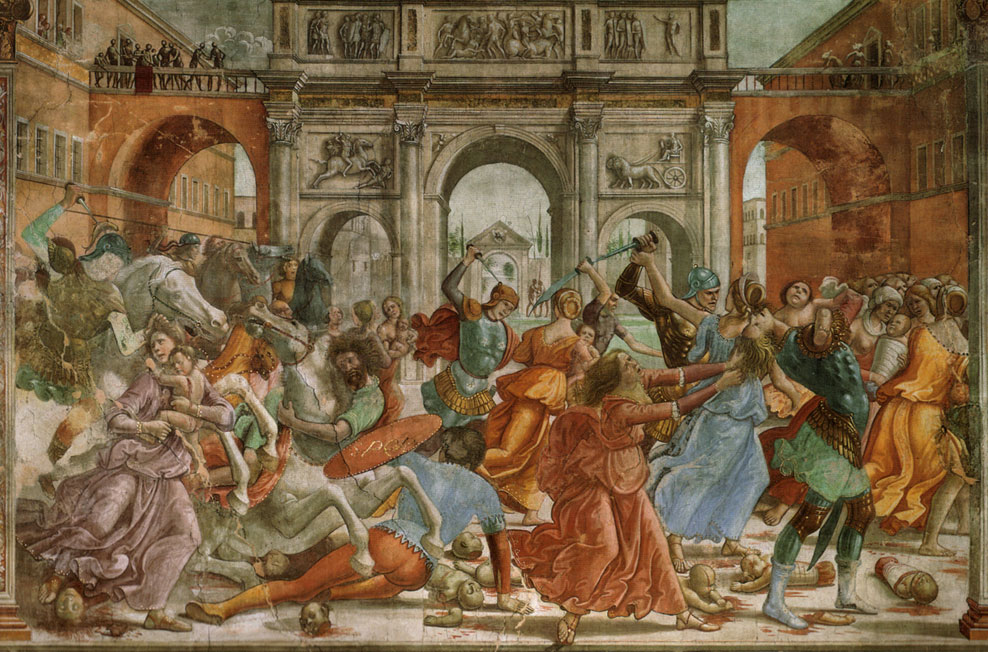
In 1485 Giovanni Tornabuoni
commissioned from Ghirlandaio frescoes and stained
glass for the chapel of the high altar, with Scenes
from the life of the Virgin and Scenes from the
life of the Baptist, filled with figures from
the upper-class Florentine society of the time.
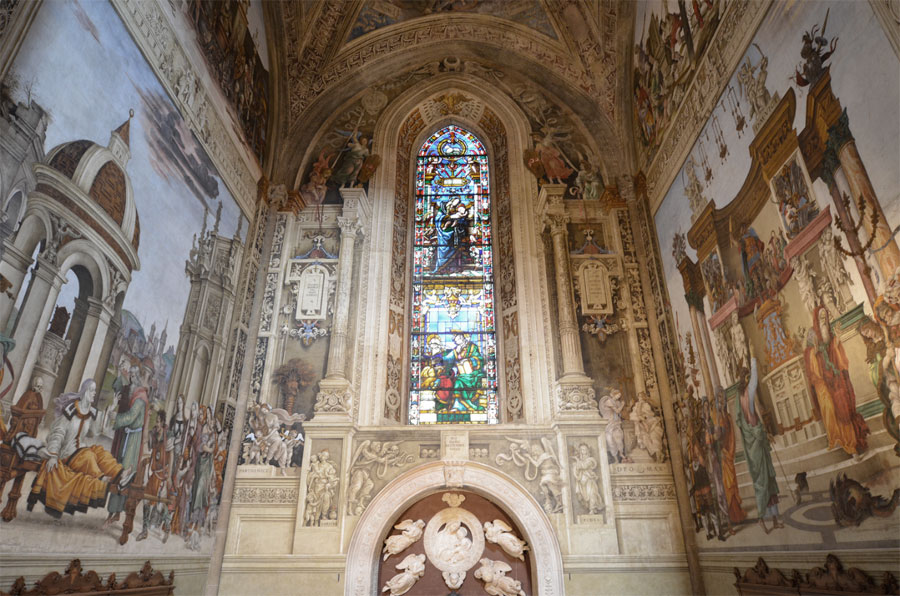
Quite different
was the chapel
of Filippo Strozzi,
decorated with
frescoes and stained
glass by Filippino
Lippi and finished
in 1502. The side
walls illustrate
scenes from the
Life of St. Philip
and the Life of
St. John the Evangelist,
while on the end
wall the chiaroscuro
painting provides
a monumental setting
for the tomb of
Filippo Strozzi
by Benedeto da
Maiano (1495).
In 1565 Santa Maria
Novella was subjected
to a programme
of restoration
ordered by Duke
Cosimo I de’ Medici
and directed by
Giorgio Vasari.
Part of this scheme
was the Gaddi
Chapel, rebuilt
by Giovanni Antonio
Dosio in 1577.
It was frescoed
by Alessandro Allori
with scenes from
the Life of St.
Jerome and Virtues,
and has an altarpiece
by Agnolo Bronzino
of Jesus raising
the daughter of
Jairus.
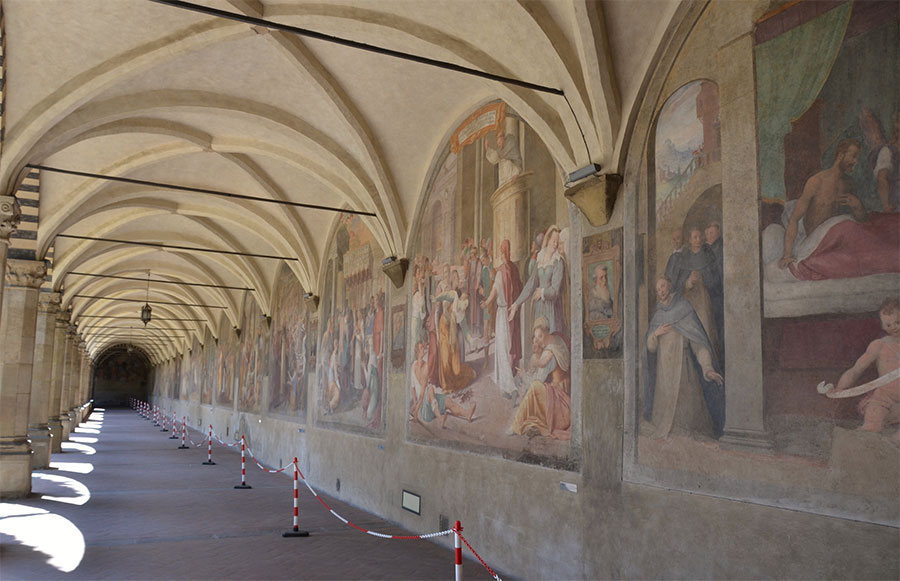
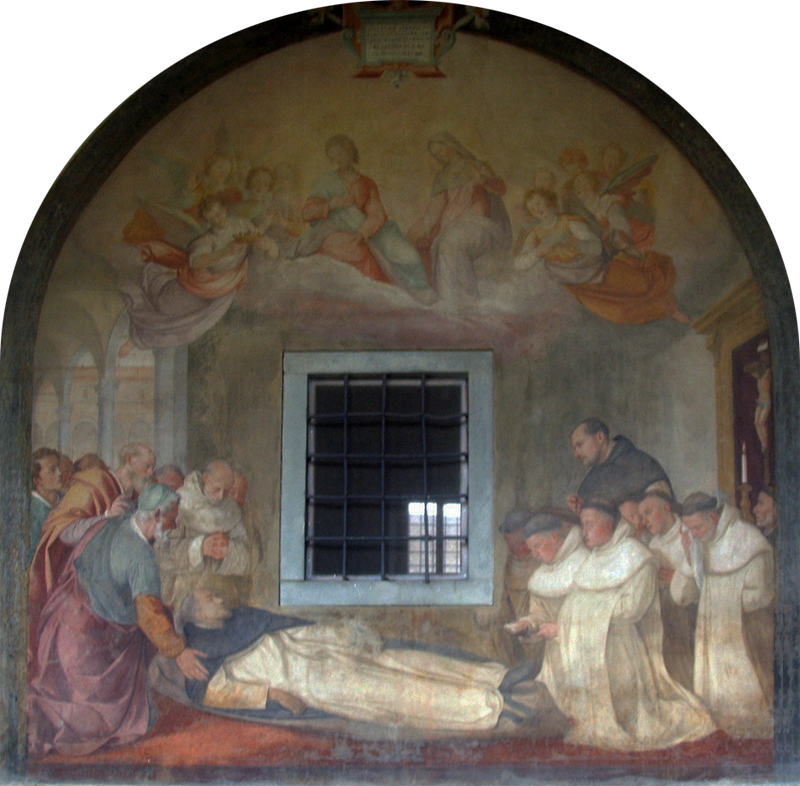
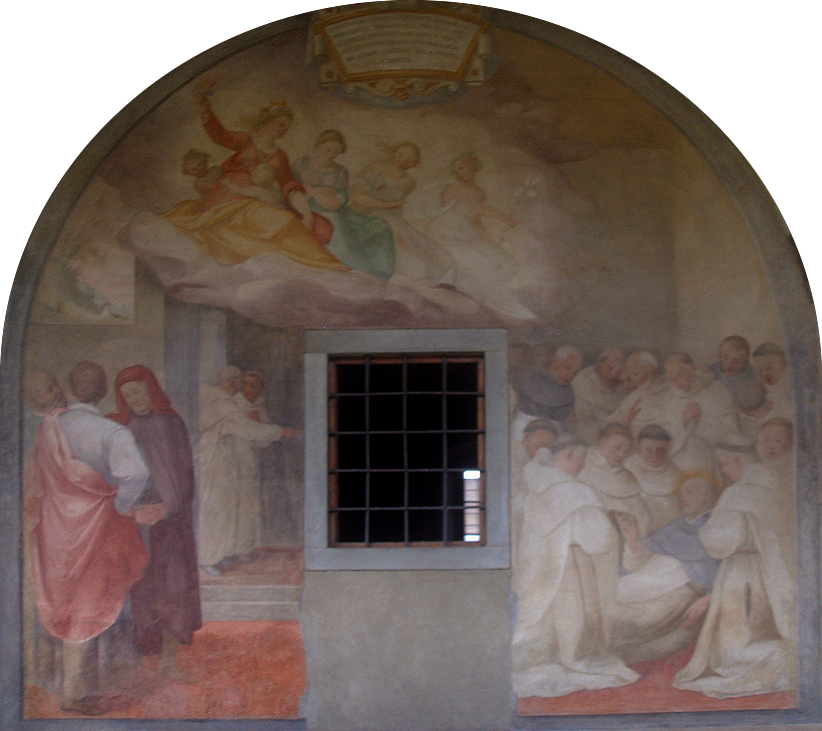
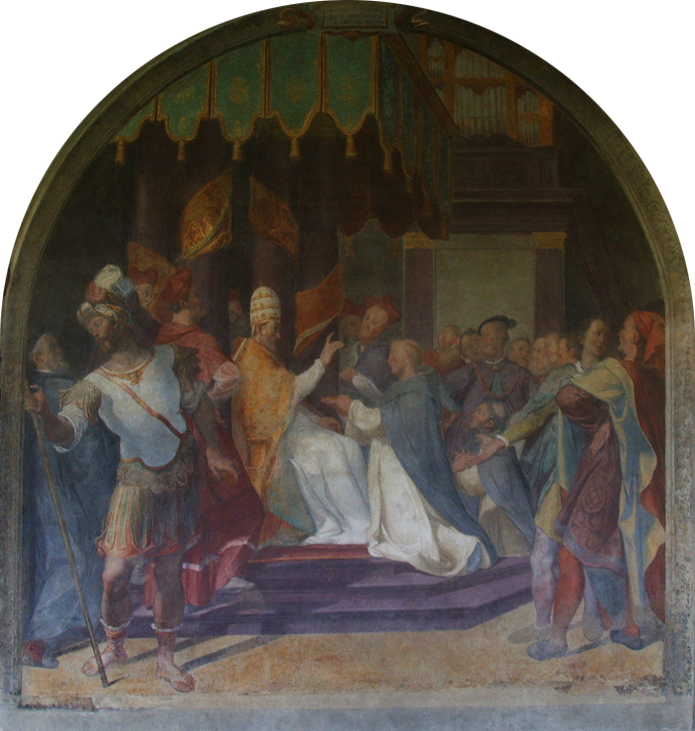
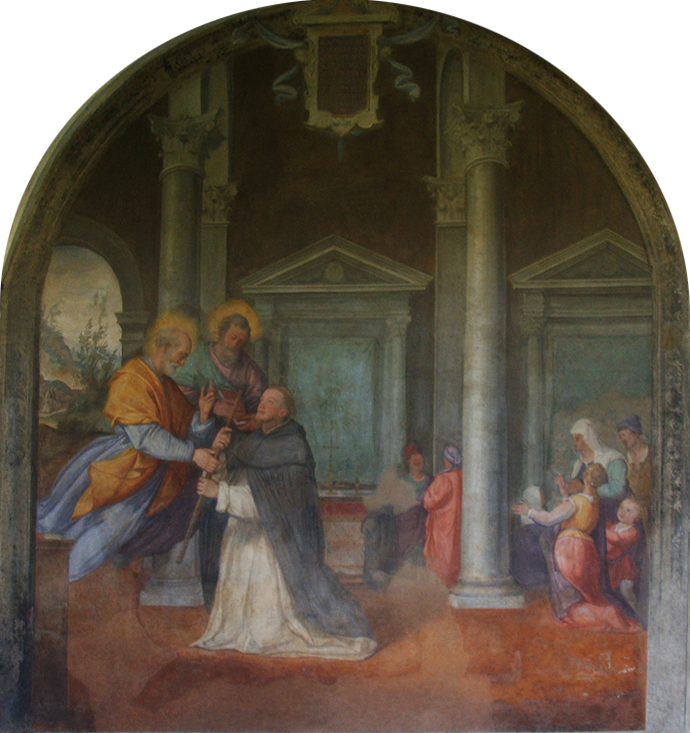
Among the most
important pictorial witnesses between the late
16th and early 17th century is the fresco cycle
in the Great Cloister of Santa Maria Novella,
with scenes from the Lives of Christ and the Dominican
Saints. The artists included Santi di Tito, Alessandro
Allori, Cigoli, and others. From the south side
of the Cloister one gained access to the old pharmacy
and perfumery, which is today reached from Via
della Scala.
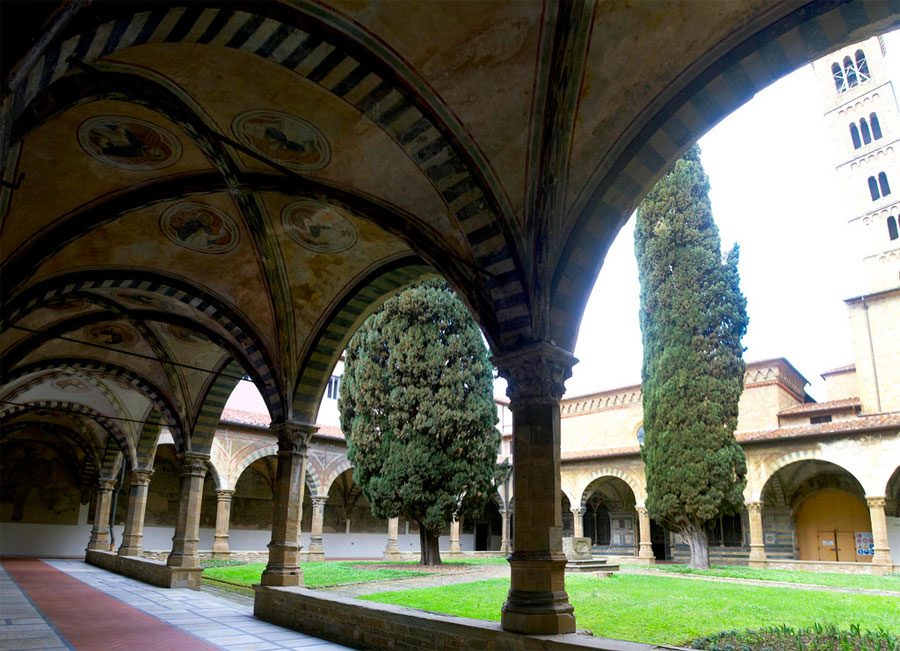
THE CLOISTERS
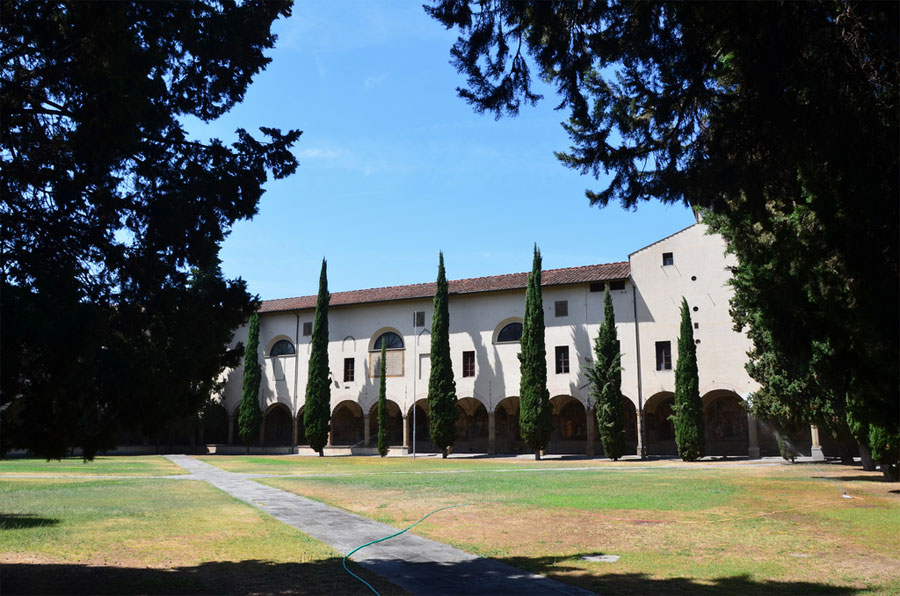
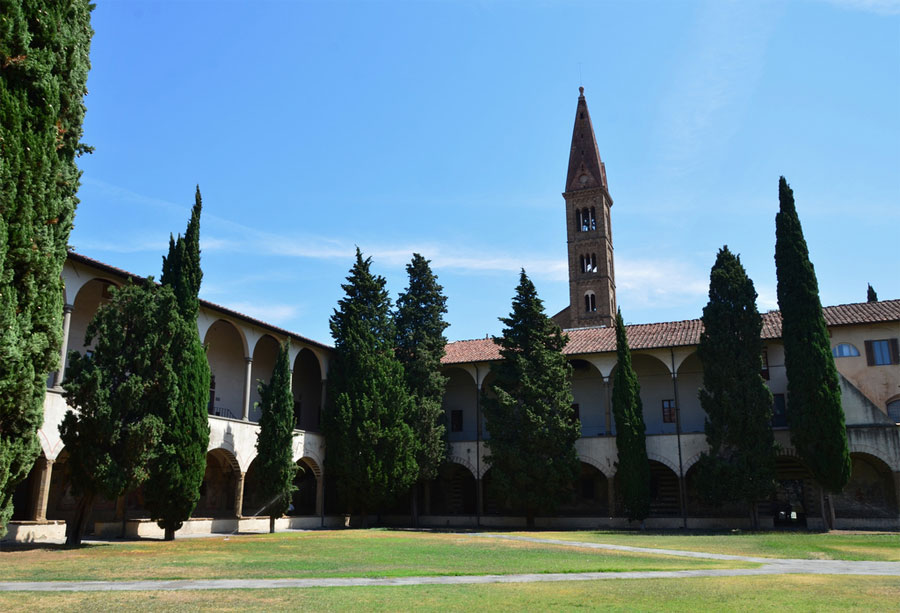
The
monumental complex
of the cloister,
considered an
extraordinary
example of Italian
Gothic architecture,
was begun around
1340 by Fra`
Sisto e Fra`
Ristoro.
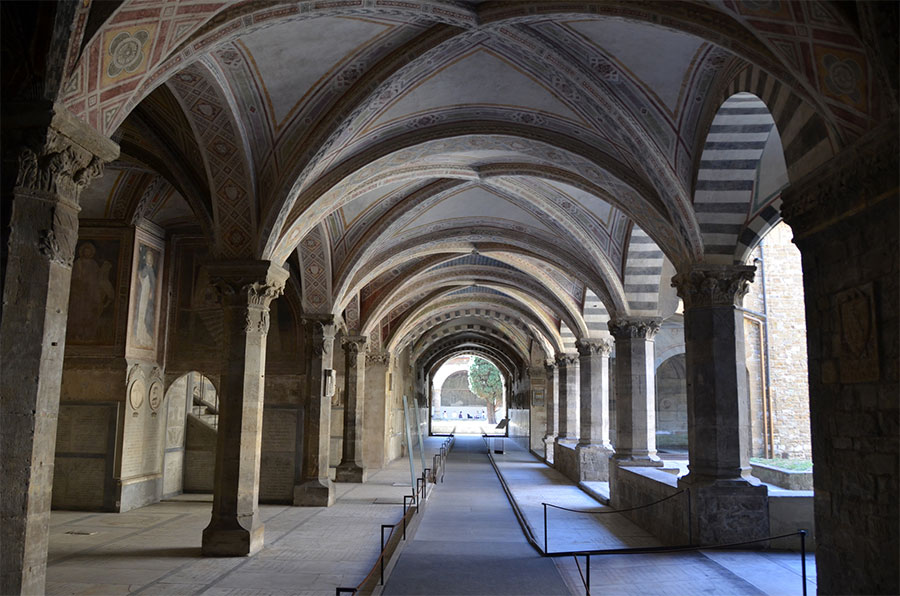
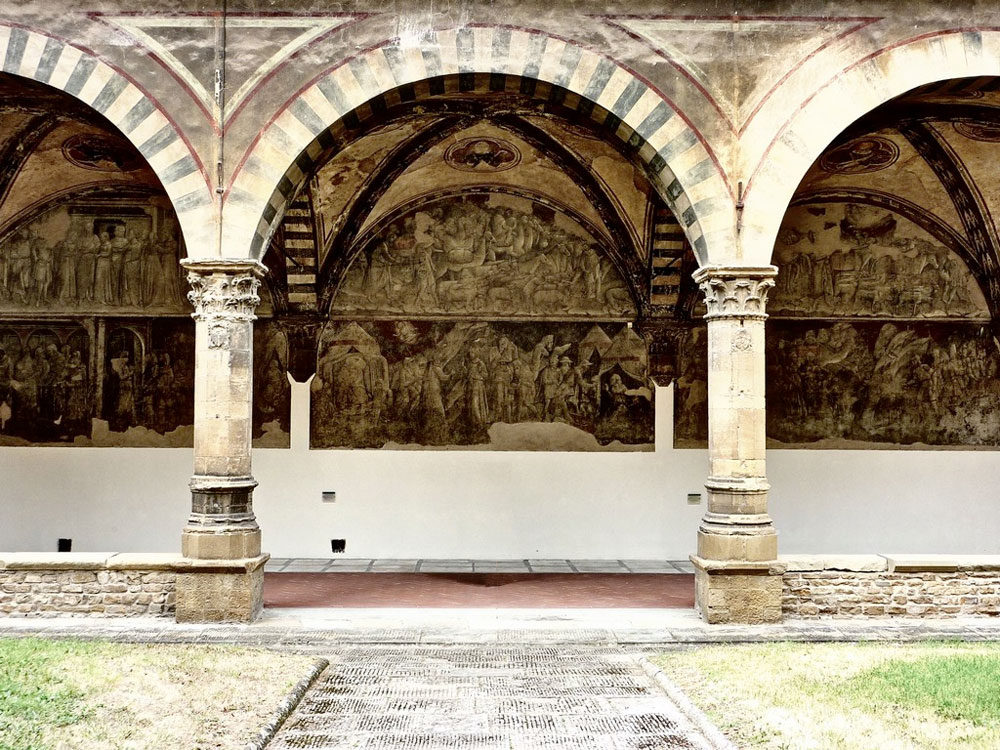
The
first cloister
on the right
of the doorway
is the so-called
Chiostro Verde
(Green Cloister)
with strong yet
harmonious proportions.
It takes its
name from the
frescoes originally
painted in "green
clay" by many
artists of early
15th century
including Paolo
Uccello (1397-1475),
one of the greatest
Florentine Renaissance
masters, who
painted here
some of his best
works like the
Flood and the
Sacrifice of
Noah.
The
cloister gives access to the Refectory (and from
here to the Large Cloister decorated at the end
of the 16th century) and to the Cappellone degli
Spagnoli. In the 16th century this was the chapter
house and was given this name because of meetings
held in this location by the Spanish followers
of Eleonora da Toledo, the wife of Cosimo I. This
large section of the building still preserves
the complex frescoes by Andrea di Bonaiuto (mid-14th
century), which exalt the work of the Dominicans,
to whom the church belonged. The fresco representing
the Church militant features the cathedral in
the background or rather the original project
of Arnolfo for the Cathedral of Florence.
The
Chiostro Verde
also gives
access to the
Chiostrino
dei Morti
and the Strozzi
Chapel, decorated
with 14th
century frescoes.
MASACCIO`S
TRINITA c.
1428
Masaccio places
the forms symmetrically
in the composition.
Each has its
own weight
and mass, unlike
earlier Renaissance
works, the
fresco is calm,
and creates
a sadmood.
The mood is
furthered by
the darkness
of the work,
and the heavy
shadows cast.
It is considered
he first painting
in the world
to use mathematical
perspective
(probably with
Brunelleschi
help).
The cadaver tomb below carries the epigram:
IO
FUI GIÀ
QUEL CHE VOI SIETE E QUEL
CHE IO SON VOI ANCOR SARETE
(I was once
what you are,
and what I
am you will
become)
|