The
Chapel of the Magi occupies
an important place in the
Medici Palace which Cosimo
the Elder built, starting
in about 1444, in accordance
to the architectural design
by Michelozzo di Bartolomeo.
In
its original aspect preceding
the "cutting-out"
of a corner desired by subsequent
owners of the Palace, the
Marchesi Riccardi in 1699,
the Chapel was perfectly
symmetrical, and had its
entrance through the central
door, which today is closed.
Inside,
the Chapel is divided into
two juxtaposed squares: a
large hall and a raised rectangular
apse with an altar and two
small lateral sacristies.
Begun around 1449-50, the
Chapel was probably terminated
in 1459 with the precious
ceiling of inlaid wood, painted
and generously gilded attributed
to Pagno di Lapo Portigiano,
according to Michelozzo's
design. The latter also designed
the flooring of marble mosaic
work divided by elaborate
geometric design, which
due to the extraordinary
value of the materials (porphyries,
granites, etc.), affirmed
the Medicis' desire to emulate
the magnificence of the Roman
basilicas and the Florentine
Baptistry.
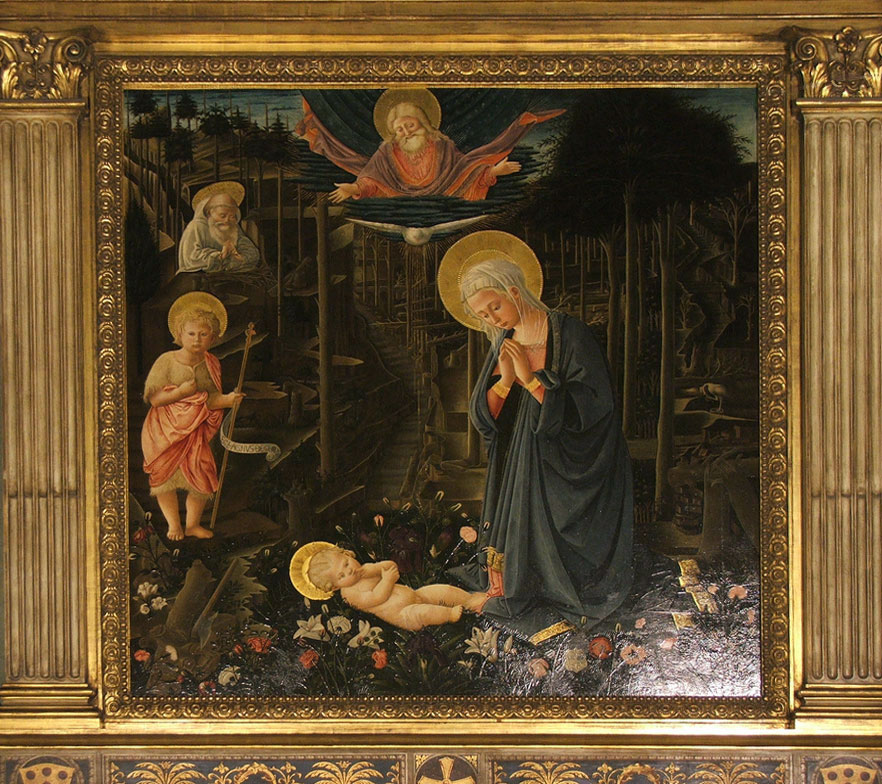
The first pictorial element
in the Chapel was the altar
panel bearing Filippo Lippi's
Adoration of the "Christ Child", which was
sold during the last century and today is
in Berlin. In its place is a copy attributed
to the Pseudo Pier Francesco Fiorentino,
a follower of Lippi, which has fully regained
its orignal beauty due its restoration completed
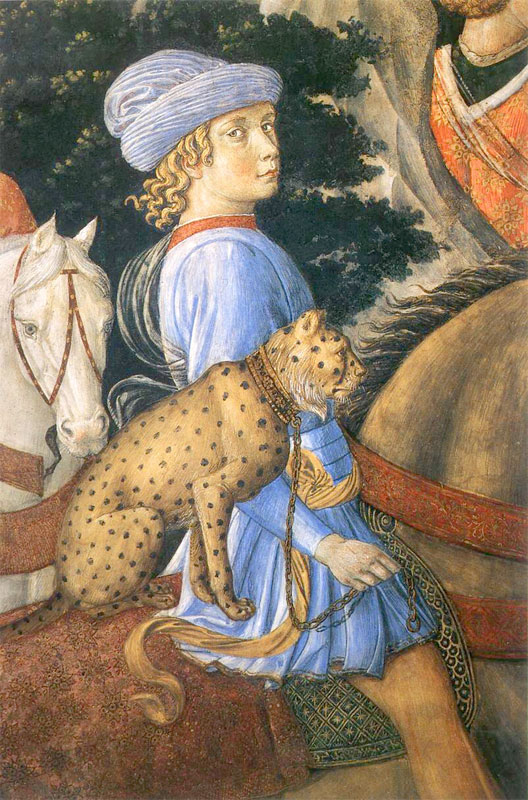
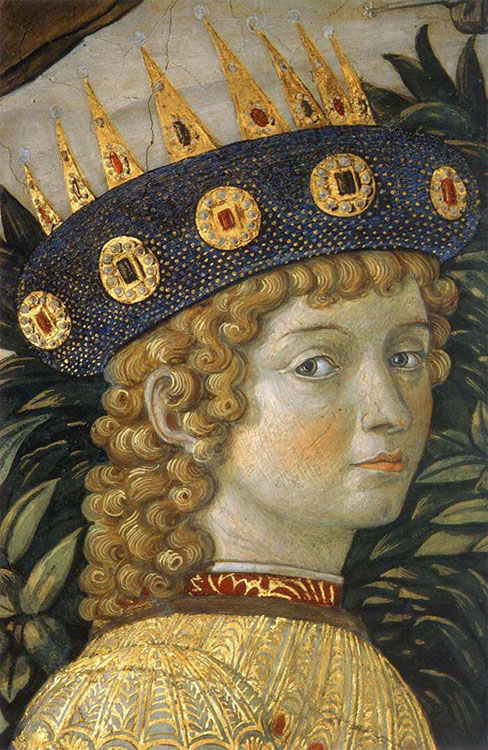
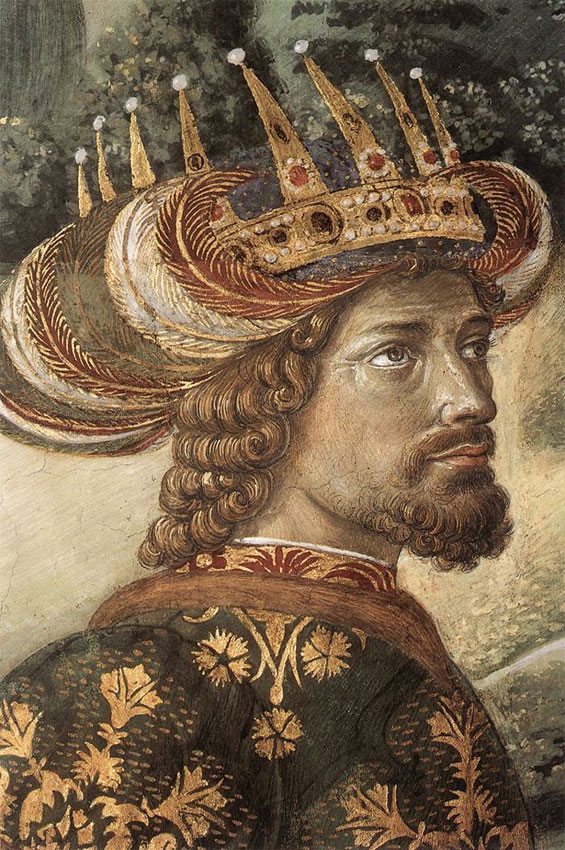
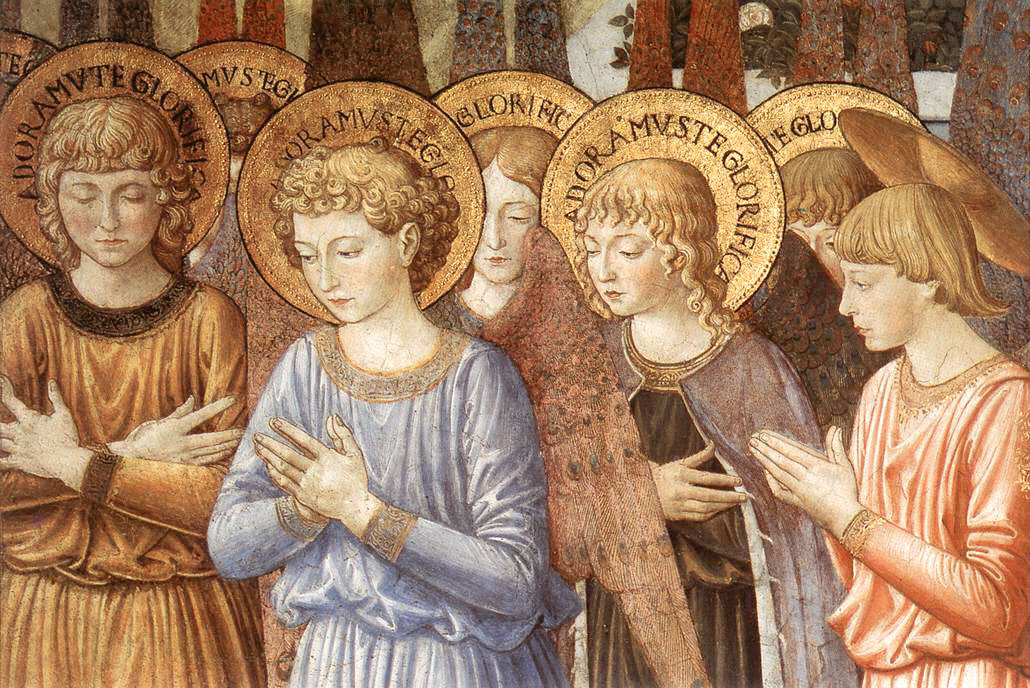
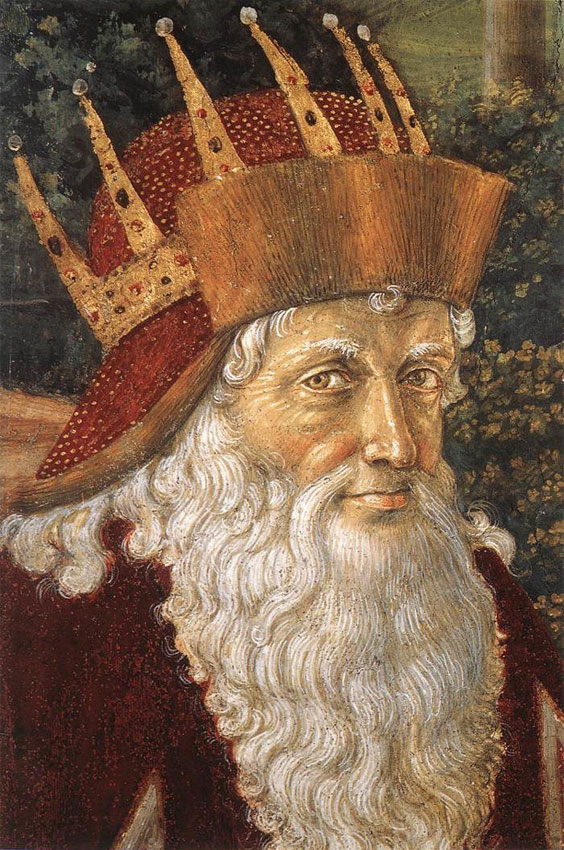
in 1992. The Chapel is famous for the series
of wall paintings by Benozzo Gozzoli, with
the Angels in Adoration in the rectangular
apse and the "Journey of the Magi" in the
large hall. Painted during the years subsequent
to 1459, but in any case by 1463, they represent
the masterpiece oft his painter, dedicated
to a sacred subject but rich in traces of
pomp and seculare legance with all the care
that Cosimo and Piero de' Medici - as exigent
buyers and connoisseurs of art - expected
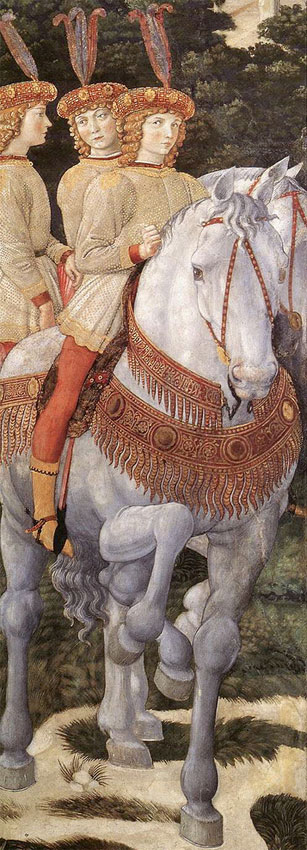
of him. Hosts of angels sing and adore on
a rural background civilly partioned, like
the typical Florentine countryside. While
the magnificent procession of the Three
Kings approaches Bethelem accompanied by
their respective entourages they enjoy the
scene of a noble hunting party with falcone
and felines along the way. The sumptuous
and varied costumes with their princely
finishings make this pictorial series one
of the most fascinating testimonies of art
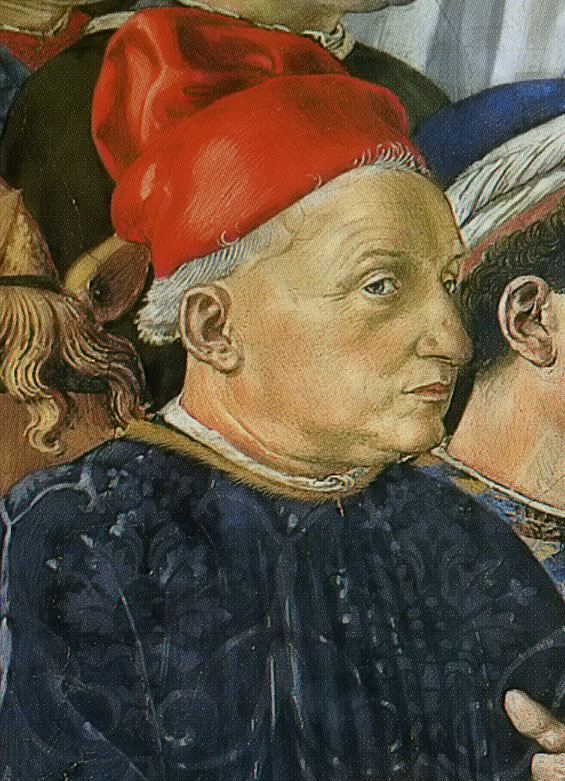
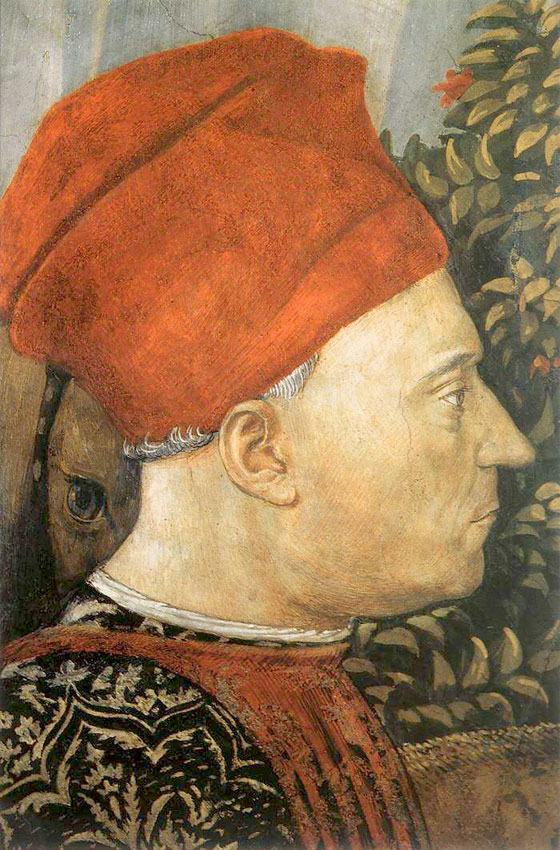
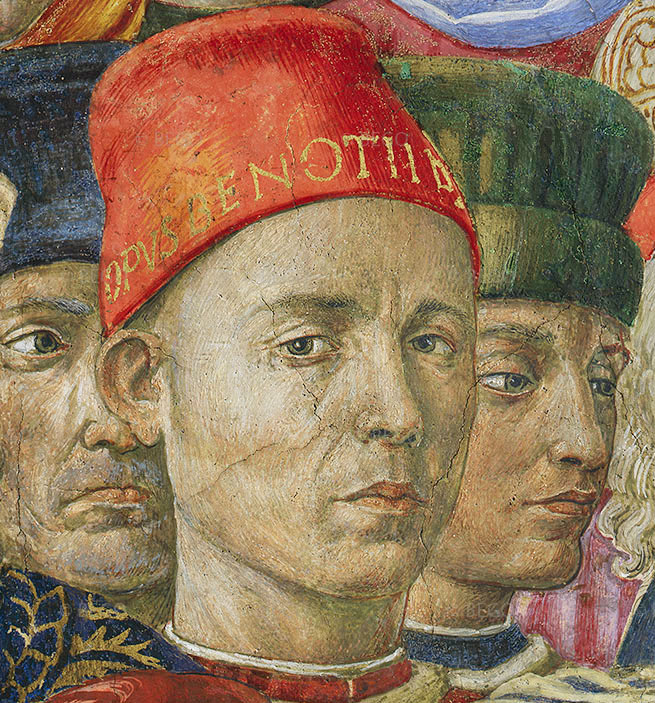
and costume of all time. Among the followers
of the Magi there are numerous family portraits.
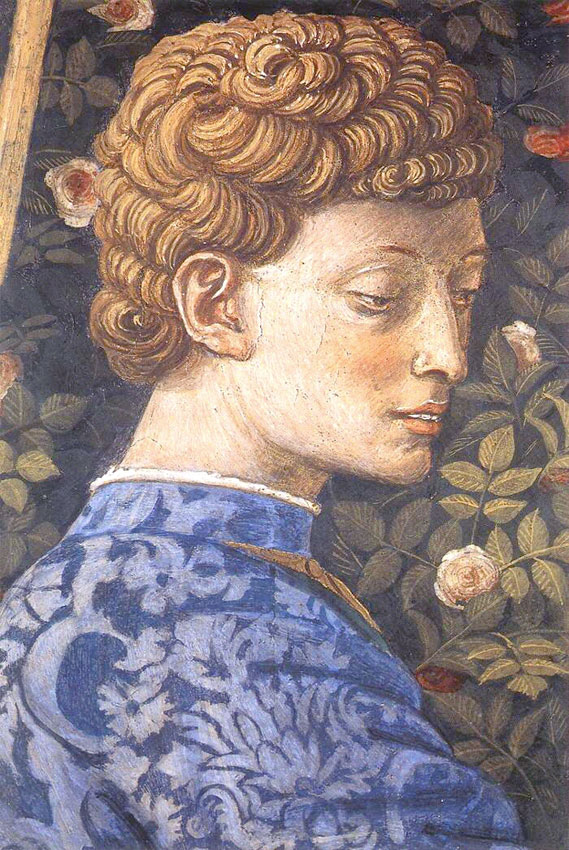
On the north wall, in the
entourage of young King Kaspar
(whom poetic tradition considers
an ideal portrait of Lorenzo
de' Medici, the future "Magnifico"), may identified
Cosimo with his sons Piero, Giovanni and
Carlo, the young princes Lorenzo and Giuliano
di Piero and the painter Benozzo. The restoration
of the paintings (1987-1992) have revealed
a refined and complex operational technique
and made it possible to fully appreciate
Benozzo's compositional capacity. He was
a skilled constructor of animated landscape
backdrops in perspective, besides being
an analytical witness of the knightly pomp
of the Court, in which are incorporated
the memories of magnificent parades which,
during the Feast of Magi the and on other
important celebrative occasions, wended
their way along the Via Larga under the
palace windows. The precious interior decoration
of the Chapel is completed by a wooden baldachin
worked in inlay and carving, whose architectural
design is attributed to Giuliano da Sangallo,
around 1469.
|