One
of the most highly venerated Marian shrines in Florence,
the church was founded in 1250 as the Oratory of
Cafaggio, by the Seven Holy Founders of the Servite
Order. These noble Florentines, having been vouchsafed
a vision of the Virgin, retired from the city to
a wild hermitage at Monte Senario, north of Florence.
The history of their new Oratory is closely connected
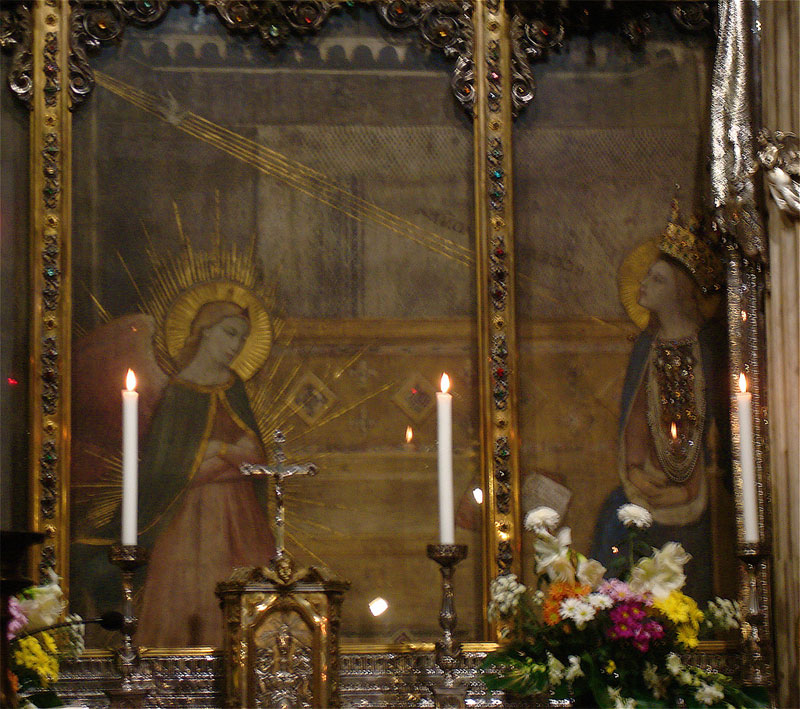
to the cultus of a painting of the Madonna, showing
the Annunciation, which is still preserved in a
chapel at the entrance to the basilica. Popular
piety relates that the fourteenth-century artist,
a certain Friar Bartolomeo, was having difficulty
in painting the face of the Virgin, when he fell
asleep; on waking he found that the fresco had been
finished by angelic hands. The religious fervour aroused by this reported miracle led to the church being enclosed by houses in the 14th century as people wanted to be near the place where the miracle had happened.
The present structure took
shape between 1444 and 1477, when Michelozzo began
the tribune with its radiating chapels, later finished
by Leon Battista Alberti.
Towards the end of the
15th century the height of the nave was increased.
The church was consecrated in 1516.
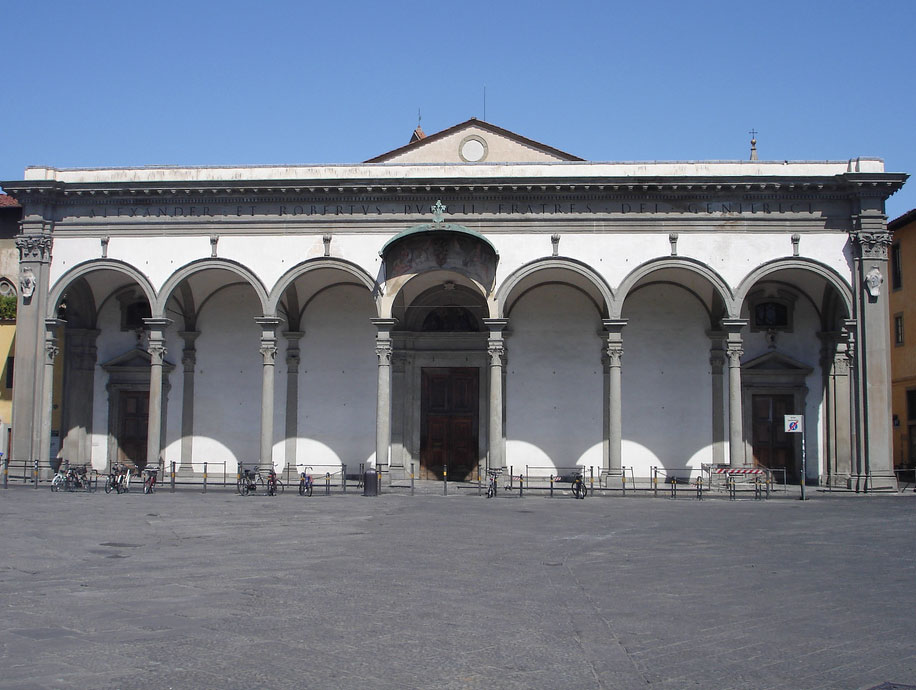
Outside, above
the central arch of the portico, built in 1601 by
the architect Giovanni Battista Caccini, there are
traces of frescoes painted between 1513 and 1514
by Pontormo, and the central doorway is surmounted
by a mosaic of the Annunciation by Davide Ghirlandaio
(1509).
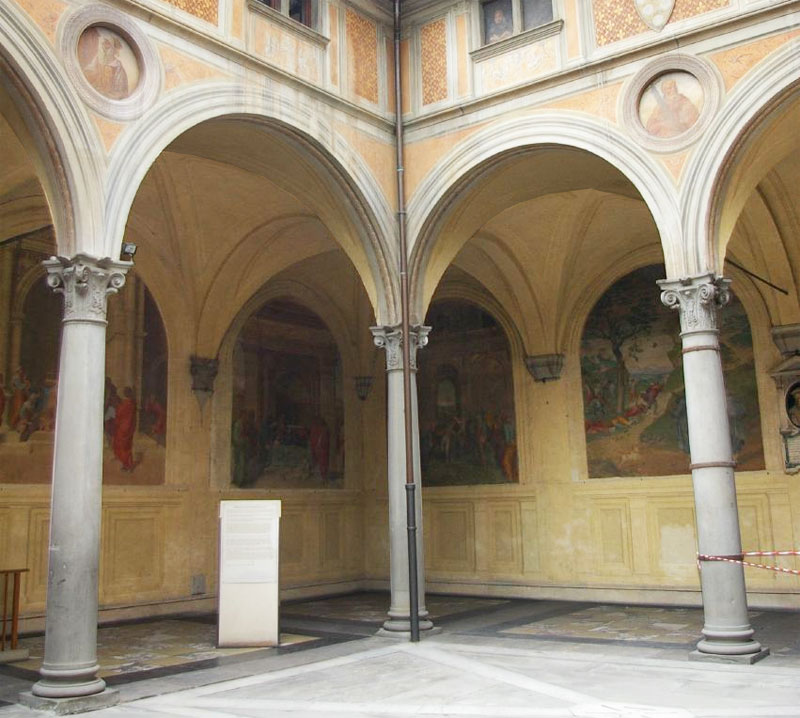
From the portico we enter the cloister,
known as the cloister of the ‘Voti’,
because it used to be filled with votive pictures
and wax statues decorated with precious ornaments.
Today it is famous especially
for its magnificent frescoes:
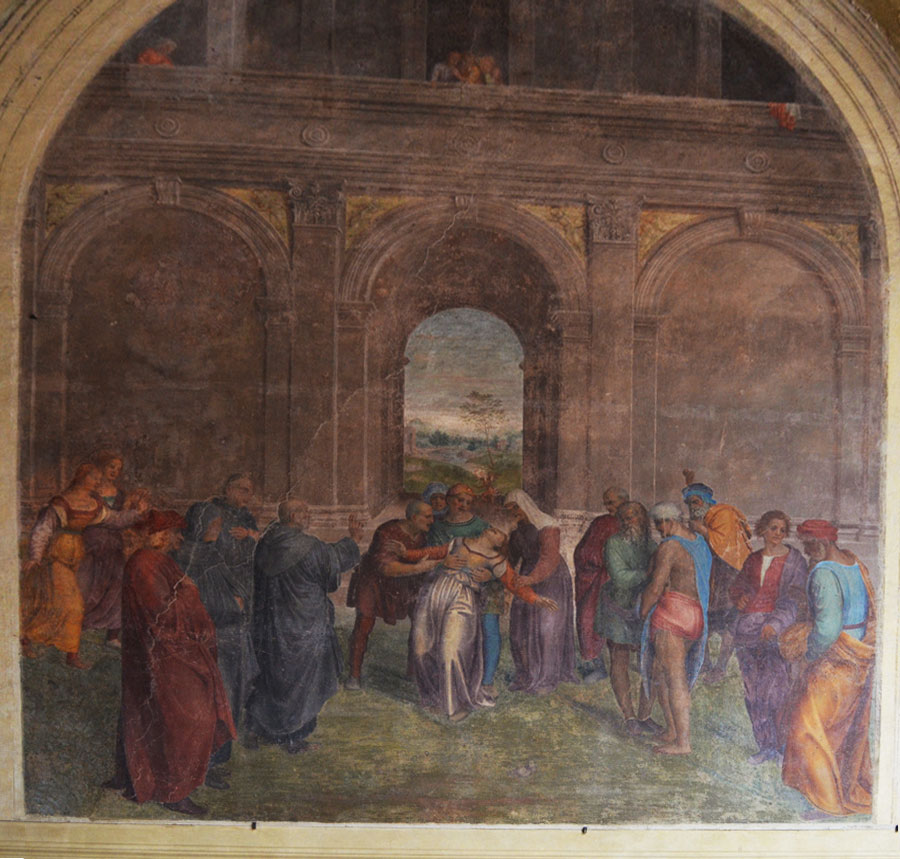
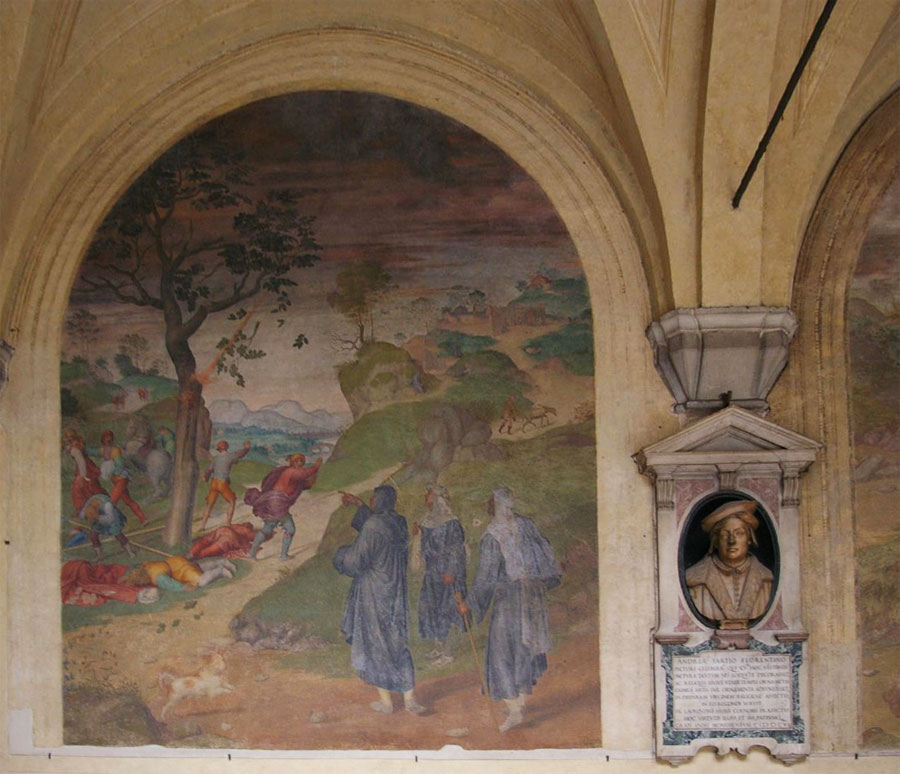
the earliest is Alesso Baldovinetti’s
Nativity, painted in 1460;
Cosimo Rosselli’s
Calling of St. Philip Benizzi
dates from 1476; the other
episodes from the life of the
Saint were painted by the
young Andrea del Sarto in 1510.
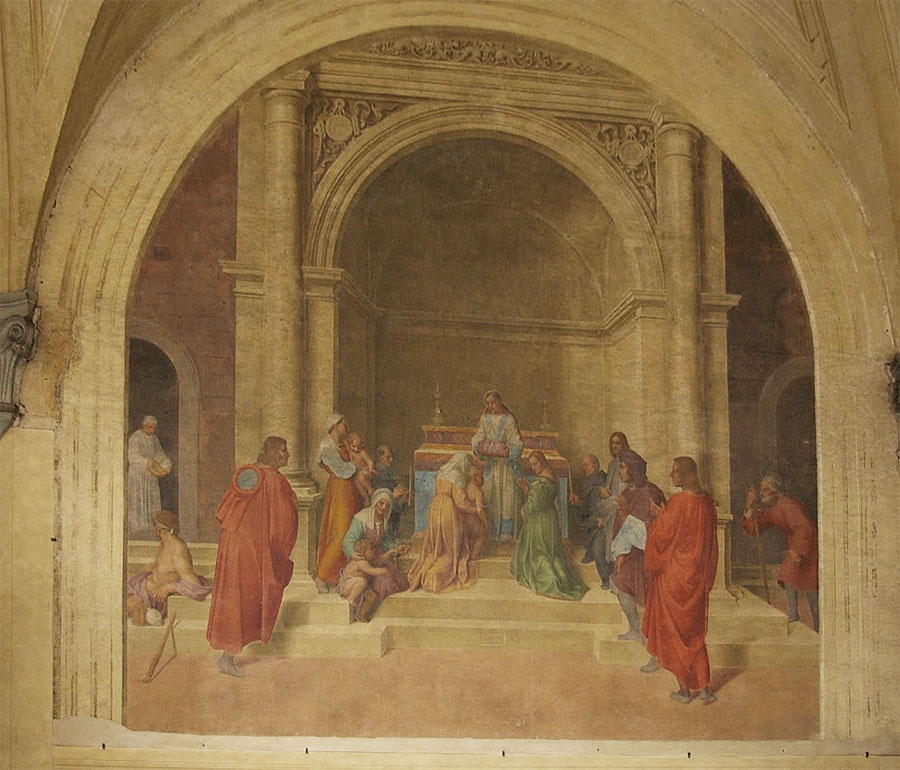
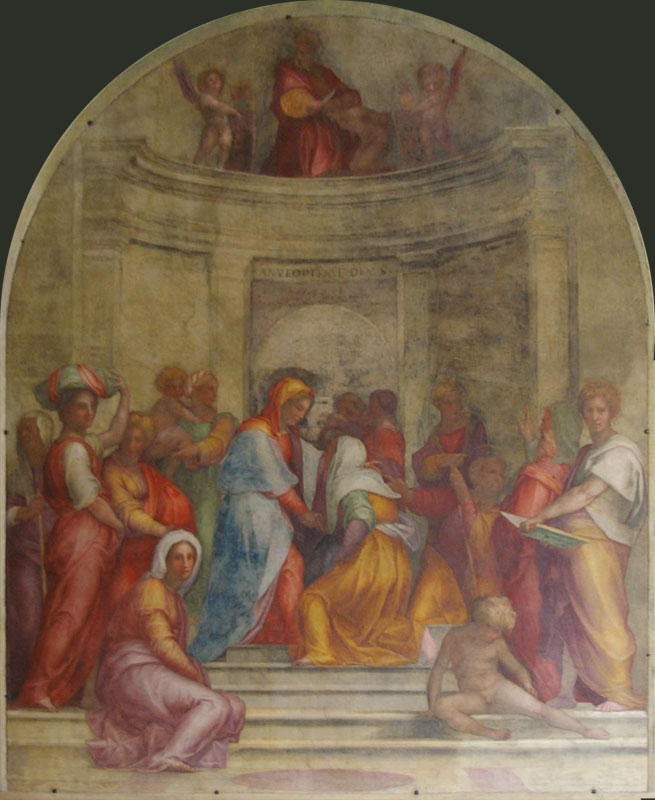
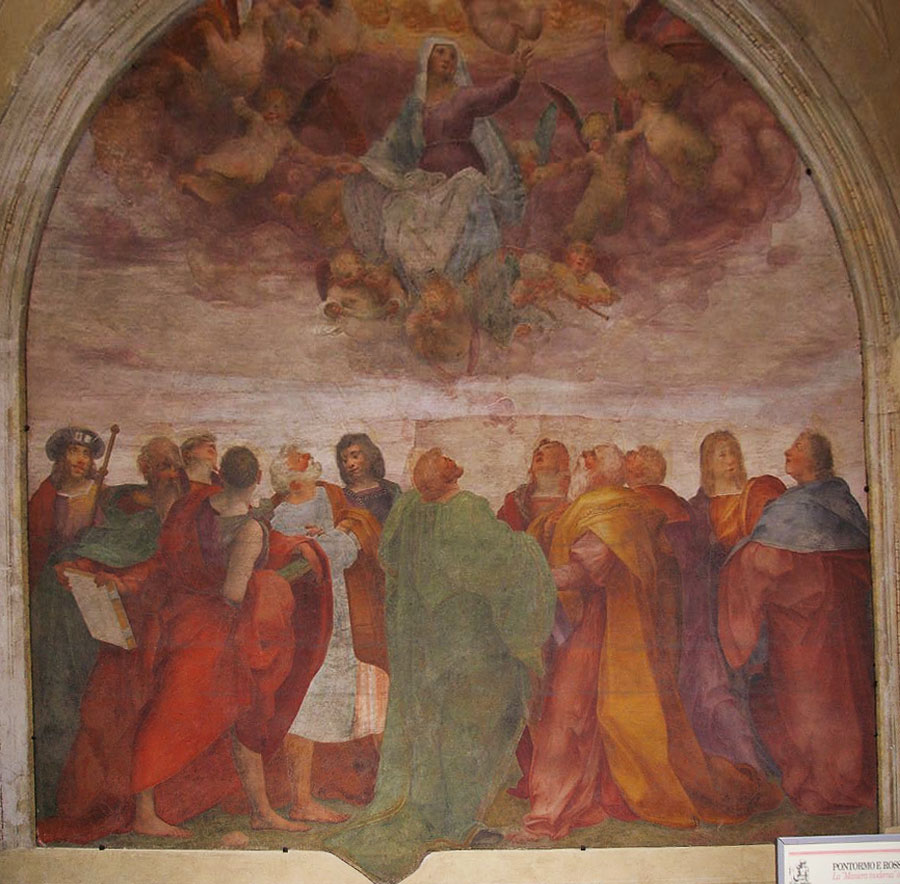
The Life
of the Virgin was narrated
in the second decade of the
sixteenth century by the youngest
and most promising artists
of the day: Rosso Fiorentino
painted the Assumption, Pontormo
the Visitation, and Fraciabigio
the Betrothal of the Virgin.
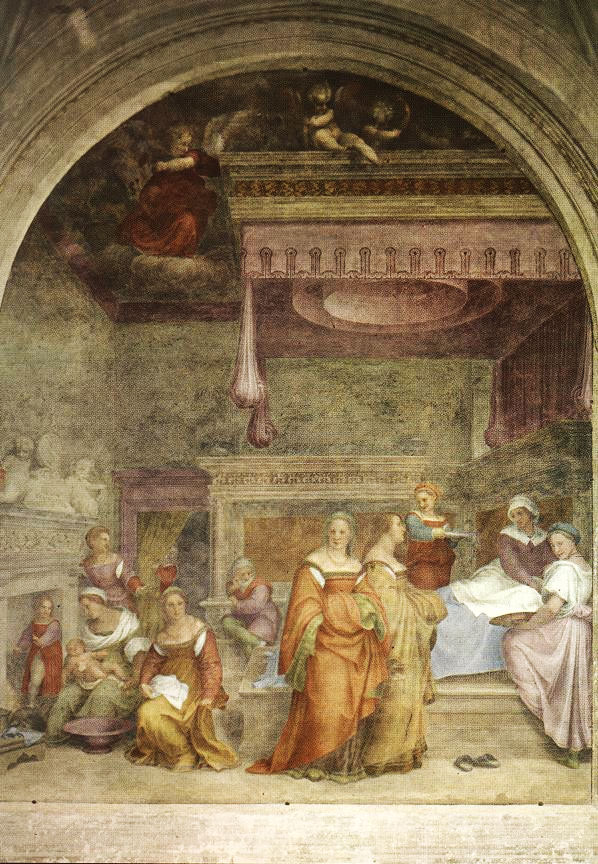
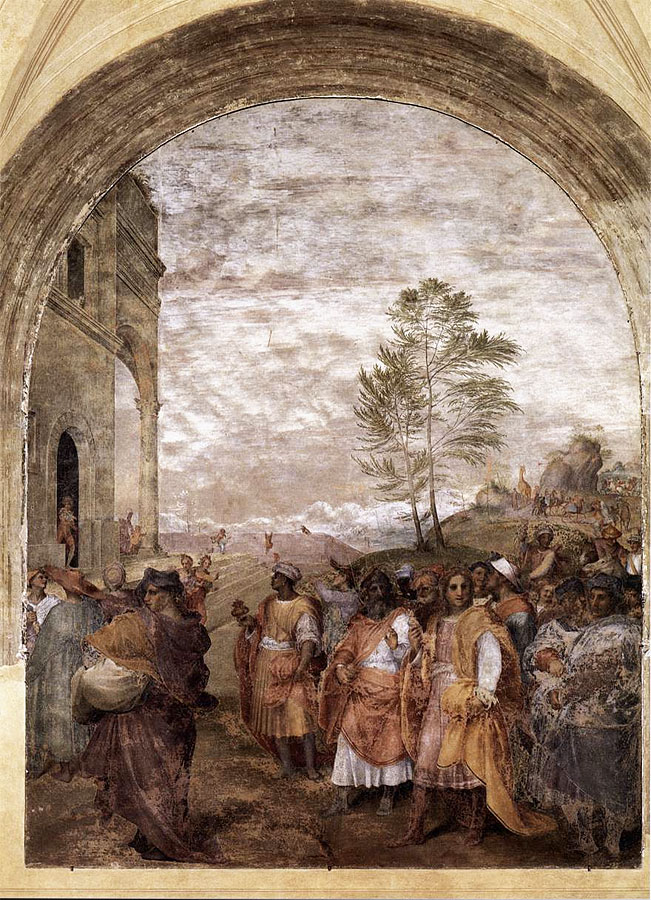
Andrea del Sarto, who had
already worked on the St. Philip
Benizzi frescoes, painted
between 1511 and 1514 the Nativity
of the Virgin and the Arrival
of the Magi.
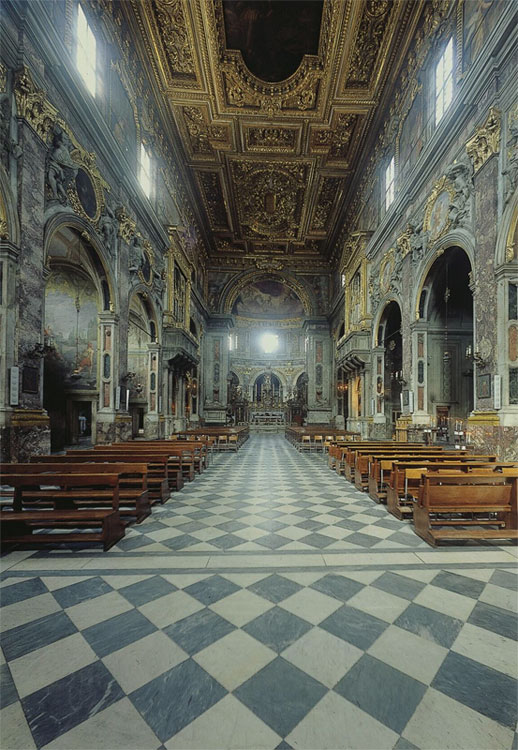
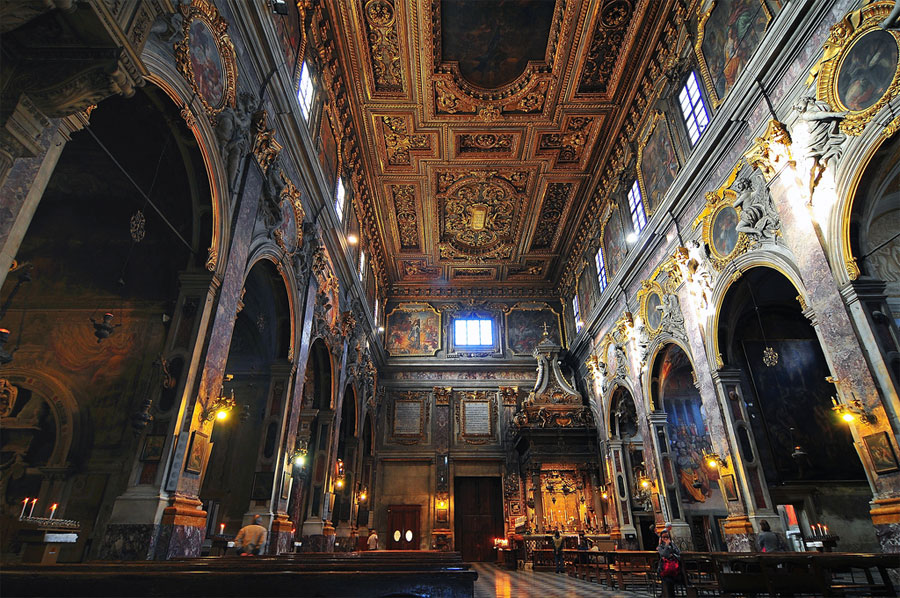
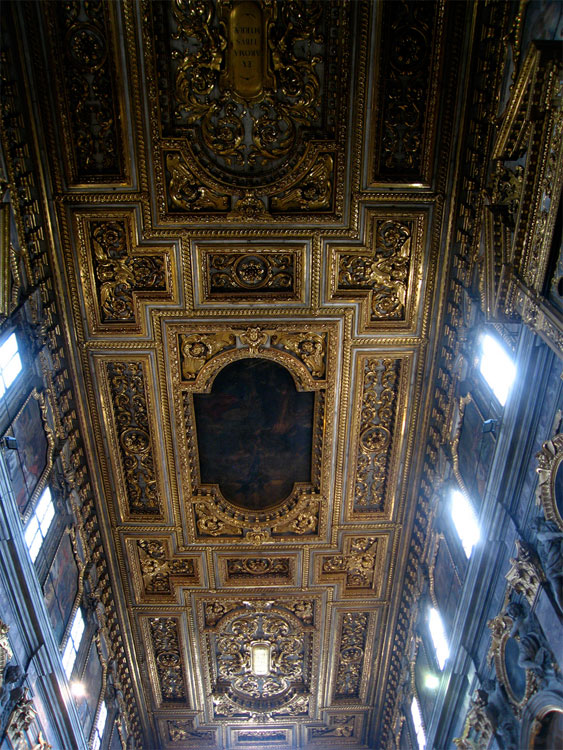
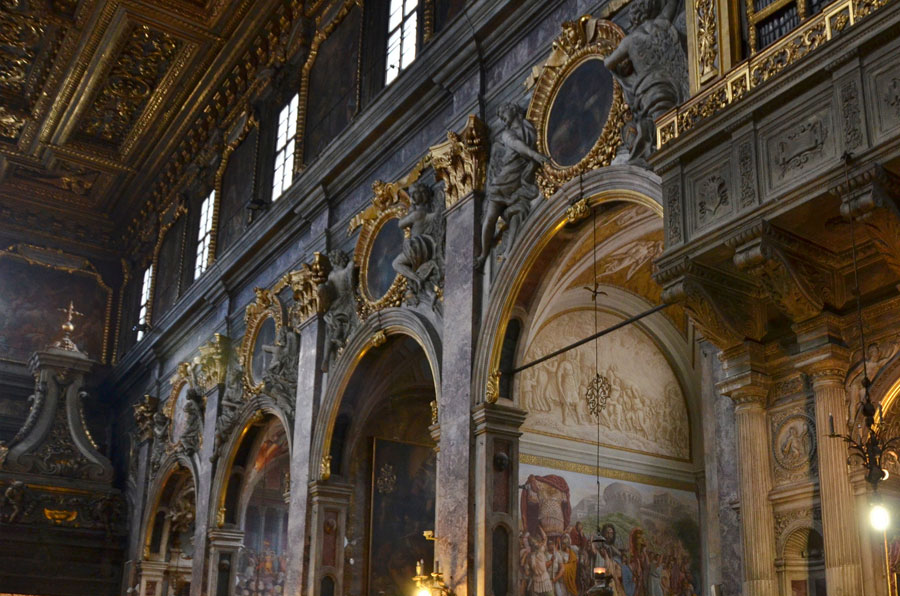
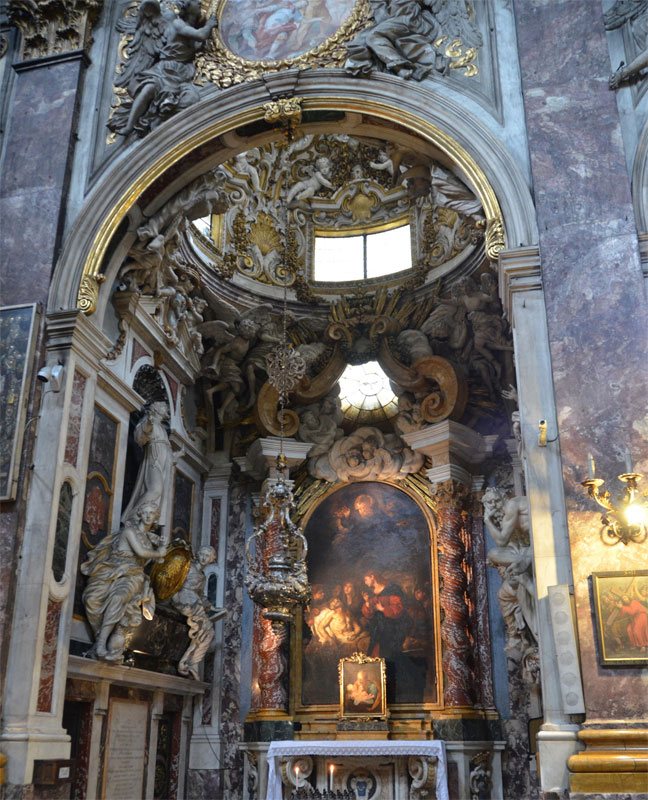
The breath-taking
interior, with arches and piers sheathed in coloured
marble (16th and 17th century), has a golden ceiling
decorated between 1664 and 1670 to a design by Baldasarre
Franceschini, known as Volterrano, who also painted
the canvas of the Assumption.
High up between the
windows there are panels and medallions, painted
with Miracles of the Annunciate by 17th-century
artists.
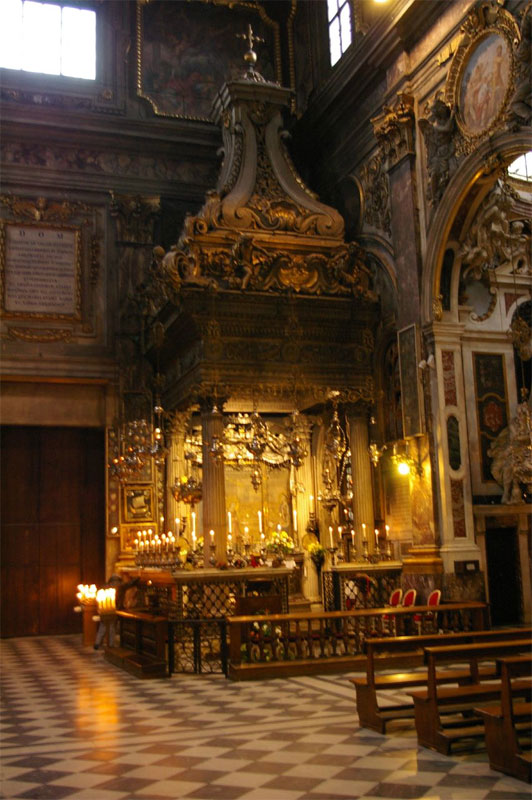
To the left of the entrance
is the Chapel of the Most
Holy Annunciate, where the
highly venerated image of
the Virgin is preserved. The
elegant tempietto which encloses
it was designed by Michelozzo
and built by Pagno Portigiani
in 1448; the small oratory
next to it has a panel of
the Holy Face by Andrea del
Sarto.
The many side chapels in the
nave are mainly of the 17th
and 18th century, such as the
Feroni Chapel, by Giovan Battista
Foggini and others, a jewel
of the Florentine Baroque.
The Tribune has
nine chapels which were completely
transformed in the baroque
period. Andrea del Castagno,
one of the principal exponents
of the Florentine renaissance
style, was especially active
in Santissima Annunziata:
one of his frescoes is of St.
Julian, in the Feroni Chapel,
another is of the Holy Trinity
with St. Jerome, in the adjacent
chapel.
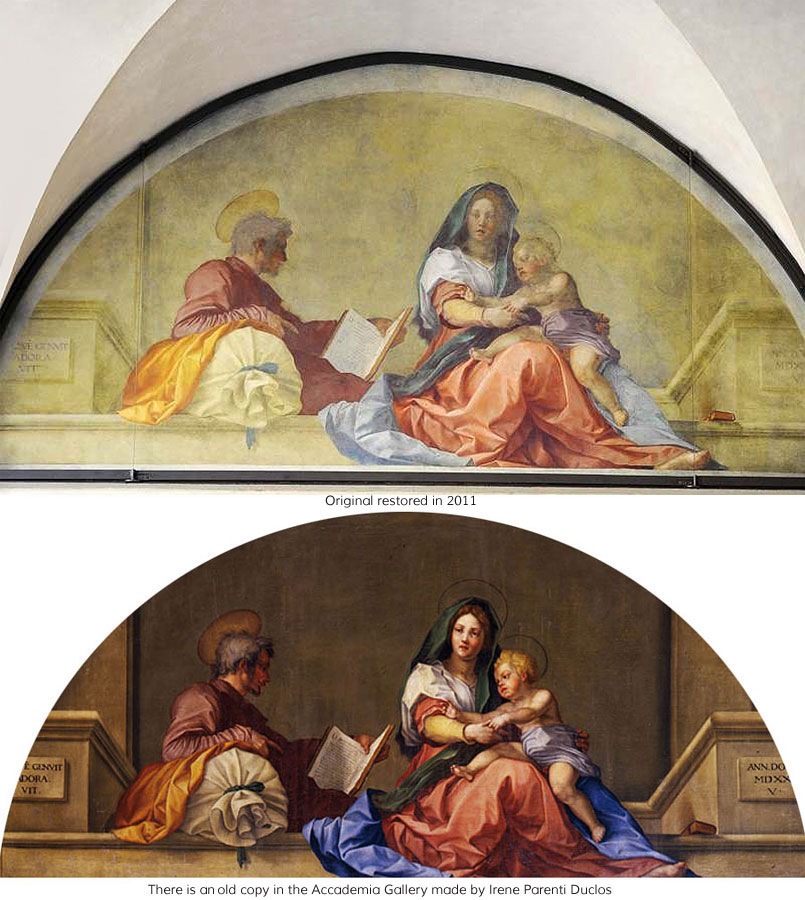
Leaving the church by the
door at the end of the nave
on the left, we enter the
Cloister of the Dead, built
around 1453. Above the door
is the celebrated fresco of
the Madonna del Sacco (1525)
by Andrea del Sarto. In the
other lunettes there is an
interesting but very damaged
fresco cycle on the Servites
of Mary, painted in the early
seventeenth century by Bernardino
Poccetti and other artists
of his time. Also in the Cloister
is the Chapel of the Company
of St. Luke, where the Confraternity
of Painters had its headquarters
in 1562 (before being moved
in 1563 by order of Cosimo
I to the Academy of the Arts
of Design).
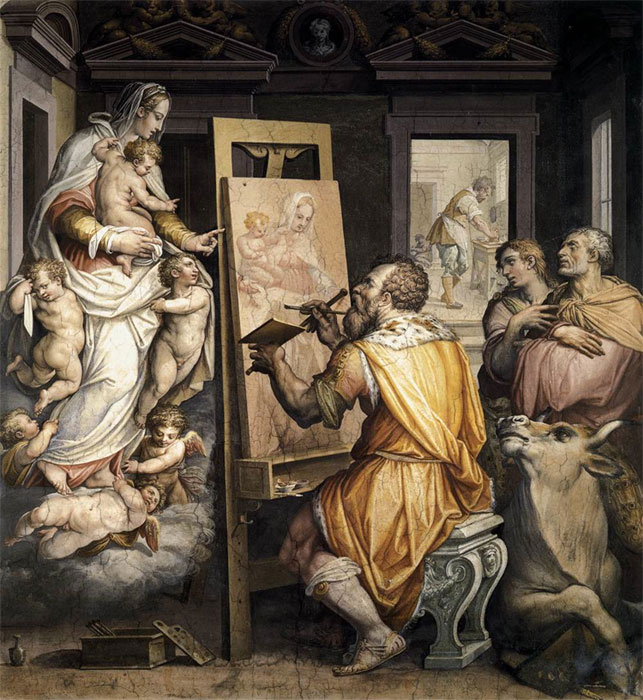
The ceiling
was frescoed with the Assumption by Luca Giordano,
and the high altar has a canvas by Giorgio Vasari
showing St Luke painting the Virgin. On the other
walls are works by Bronzino, Pontormo and Santi
di Tito.
|